

















Archives: Published Articles

The MDR Delay’s Impact on Regulatory and Testing—An Orthopedic Innovators Q&A


While the recent MDR delay gives companies some breathing room, it should not stall their effort in ensuring their products remain compliant for the EU.


regulatory compliance


By Sean Fenske, Editor-in-Chief at Orthopedic Design & Technology


Companies were beginning to get nervous in terms of keeping their products on the market in the EU. With the impending deadline for transition of MDD to MDR for legacy products already in hospitals and doctor’s offices, there would have been a significant shortage of medical devices available, potentially impacting quality of care. As a result, the EU Parliament voted to extend the deadline.
 
To find out the details of the new deadlines for transition and its impact on testing for medical device manufacturers, Jordan Elder, director of regulatory affairs at Regulatory Compliance Associates, and Thor Rollins B.S. RM(NRCM), VP, global market segment leader—Medical Device at Nelson Labs LLC, took time to address a number of questions around this important issue. They provided a comprehensive overview of what considerations medtech firms should keep in mind when looking at the new deadlines and their products they’d like to keep on the EU market.


Sean Fenske: The EU MDR went into effect in May 2021 so can you please explain what was postponed with regard to the latest action involving the MDR?
 
Thor Rollins: One of the latest actions involving the EU MDR that was postponed was the application of the Unique Device Identification (UDI) system for certain low-risk medical devices. The EU has delayed the UDI system’s full implementation for low-risk devices until 2027. Also due to the limited capacity of Notified Bodies, the general need for registration was also pushed back.
 
Jordan Elder: To expand on that second portion, this update does not change any of the current safety and performance requirements under the MDR, nor does it change any of the newly introduced regulations. This extension only amends the transitional provisions to give more time for manufacturers to transition from the previously applicable rules to the new requirements of the Regulation.

This extended transition period applies only to “legacy devices” or those covered by a certificate or declaration of conformity issued under the MDD before May 26, 2021. For medical devices covered by a certificate or a declaration of conformity issued before May 26, 2021, the transition period to the new rules is extended from May 26, 2024 to December 31, 2027 for higher risk devices (Class IIb and Class III), December 31, 2028 for medium and lower risk devices (Class I and Class IIa), and May 26, 2026 for Class III implantable custom-made devices.
 
However, the extension of validity for these devices only applies if one of the following conditions is met:
 

  1. The manufacturer has signed a contract with a Notified Body for the conformity assessment of the device in question at the moment of expiry.
  2. A national competent authority has granted a derogation in accordance with Article 59 of the MDR.
  3. A national competent authority has required the manufacturer to carry out the conformity assessment procedure within a specific time period in accordance with Article 97 of the MDR.

 
The “sell-off” date—the end date after which devices that have already been placed on the market and remain available for purchase—has been withdrawn. Under the original requirements, any previously approved devices that had yet to be recertified but were still available for purchase would have been required to be completely removed from the market by May 26, 2025.


Fenske: What’s the situation in the EU that brought about the reason for this delay?
 
Rollins: There were many factors that went into the reason for the delay, two of the biggest reasons was the COVID-19 pandemic, which has put significant strain on medical device manufacturers, notified bodies, and regulatory authorities, and also the number of notified bodies and their resources. These two factors made it evident that keeping the original date would risk having approved medical devices for the market.
 
Elder: Regarding the number of notified bodies, currently, 36 have been designated under Regulation (EU) 2017/745. As of October 2022, an additional 26 notified body applications were being processed, with three of them at an advanced stage in the application process. At the time, notified bodies reported they had received a total of 8,120 applications from manufacturers for MDR certification.

It was also reported only 1,990 MDR certificates had been issued to manufacturers. According to an estimation presented by the notified bodies, the number of MDR certificates issued to manufacturers by the original deadline (May 2024) would likely only reach around 7,000 with the current issuance rate. In 2022, due to the reduced number of notified bodies and a significantly slower rate of MDR certificate issuance than initially expected, many regulators and government officials began to voice concerns that the current compliance deadline would create a shortage of legally marketed medical devices, putting patient safety at risk.
 
The MDR certificate bottleneck was further exacerbated by COVID-19, as Thor mentioned, and its impact on the global supply chain and clinical investigations. In order to prevent a medical device shortage and reduce the strain on the notified bodies and manufacturers, the European Parliament agreed to adopt the transition delay.


Fenske: What changes come with the MDR with regard to testing?
 
Rollins: The MDR introduces new requirements for testing medical devices, including new rules on clinical data requirements, post-market surveillance, and clinical investigations. The MDR also requires testing to the most current ISO standard; this includes tests like extractable and leachable testing and toxicological risk assessments. These tests were not required when most of these devices were originally approved and, therefore, have gaps when looking to renew their approval under MDR.
 
Elder: Exactly. The MDR requires manufacturers to submit significantly more documentation covering the total product lifecycle than previously under the MDD. A critical change with MDR is the clinical evidence necessary to demonstrate the safety and efficacy of the device. The rules on equivalence have been revised, making it more difficult for manufacturers to use this route in their clinical evaluation.

Under the new regulation, device product classification is expanded with new and revised terms and classification rules. Manufacturers must be aware of how their product is now regulated to fully understand the level of clinical information required for their device and whether clinical testing is required.
 
In addition to the updated clinical requirements, biological evaluations are under more scrutiny by the notified bodies under the MDR. Manufacturers should be careful to ensure all stages of preclinical safety testing, including chemical characterization and evaluation, biocompatibility, and a toxicological risk evaluation, have been completed, as Thor mentioned.
 
In order to facilitate some of the new testing requirements, the MDR officially recognizes harmonized standards as a method for manufacturers to demonstrate conformity to the General Safety and Performance Requirements (GSPR). Demonstrating compliance with applicable harmonized standards allows manufacturers and notified bodies to streamline the conformity assessment process.


Fenske: Might this delay cause some companies to reassess their regulatory strategy in either keeping a medical device on the EU market or getting a new device to replace it certified?
 
Rollins: Yes, it certainly could. Ultimately, the delay provides more time for companies to prepare for compliance, but it also means they may have to continue selling their devices under the older Medical Device Directive (MDD) until the new regulations are fully implemented.
 
Elder: In addition, companies that have struggled to make the transition might want to reassess their strategy if they had considered discontinuing their MDR certification due to the rapidly approaching deadline. However, since the expectation is companies have already demonstrated their intent with their notified body to transition to MDR, most companies would not need to reassess their regulatory strategy beyond accounting for updated timelines.


Fenske: Given the delay for the recertification of MDD devices under the MDR, what timeline should device manufacturers be working under to keep a product on the market?
 
Rollins: Device manufacturers should work under the timeline of the EU MDR’s transitional provisions, which was extended as Jordan explained earlier. High-risk devices are subject to the shorter transition period ending in 2027, while low- and medium-risk devices have until the end of 2028 to complete a conformity assessment.
 
Elder: The MDR delay and subsequent MDD certificate validity extension require that manufacturers have already taken steps with their notified body to transition to MDR. Although the delay provides manufacturers more time to transition to MDR, manufacturers transitioning from MDD to MDR should work with their notified body to ensure an appropriate submission/review timeline and a smooth transition.
 
Manufacturers should avoid delaying their MDR transition more than necessary to ensure the notified body has sufficient time to review and issue the MDR certificates. Currently, notified bodies are scheduling technical file reviews more than 24 months out. Under today’s notified body timelines and bandwidth, a company that chooses to delay its transition for 20 months would be pushing its MDR certificate issuance into 2027, assuming there are no major issues (technical file deficiencies) or unforeseen delays from the notified body.


Fenske: From the testing standpoint, what changes with the MDR are creating the greatest challenges and why? What should device makers be doing in preparation?
 
Elder: The greatest challenge manufacturers face from a testing standpoint is the increased clinical evidence data requirements. Manufacturers should review the updated classification rules to determine whether their product’s device classification has changed under the MDR. A clinical evaluation plan (CEP) must be established. Manufacturers should review the new requirements for claiming equivalence to understand if their device may continue to utilize this pathway as a part of the clinical evaluation (where applicable). Manufacturers must demonstrate their device is “state of the art” as part of their clinical testing/evidence. Manufacturers should be aware that the need to include post-market clinical follow-up (PMCF) data as a part of the technical documentation conformity assessment will depend on the device’s risk classification and available clinical data.
 
Rollins: In addition to the clinical data and evidence challenges, I’d also point to the new rules on post-market surveillance and vigilance, and the stricter requirements for clinical investigations. Device makers should prepare by conducting comprehensive risk assessments and by conducting more extensive clinical studies and collecting more data on their devices’ safety and performance.
 
Elder: One last item to remember is a periodic safety update report (PSUR) is required for Class IIa, IIb, and III devices.
 
Rollins: Keep in mind, the changes are putting more emphasis on the chemical characterization requirements for high-risk devices and, because the industry is limited in capacity of these tests, manufacturers should not wait to start evaluating the biocompatibility requirements under MDR.
 
Elder: Manufacturers should not assume their clinical evaluation under the MDD will provide sufficient clinical evidence under the MDR. Manufacturers should review their existing clinical data and conduct a gap assessment to determine whether the device “conforms with relevant general safety and performance requirements under the normal conditions of the intended use of the device, and the evaluation of the undesirable side-effects and of the acceptability of the benefit-risk-ratio is based on clinical data providing sufficient clinical evidence,” as is stated in Article 61 of the MDR.


Fenske: Do you have any additional comments you’d like to share based on any of the topics we discussed or something you’d like to tell orthopedic device manufacturers?
 
Elder: Don’t delay your MDR transition due to the deadline extension. Notified bodies are already at capacity and are scheduling more than 24 months out for MDR Technical File reviews. Use this extra time to ensure your company can seamlessly transition from the MDD to MDR.
 
Rollins: Well said. Medical device manufacturers should prioritize compliance with the EU MDR and work closely with notified bodies and regulatory authorities to ensure their devices meet the new regulation requirements. They should also stay informed about any new developments or changes to the regulations and be prepared to adapt their strategies accordingly.


To begin the Regulatory Compliance Associates scoping process today, please enter your information in the blue form below and click the submit button at the bottom of the webpage. You may also email us at [email protected].

Susan J. Schniepp, distinguished fellow at Regulatory Compliance Associates, addresses the difference between regulatory compliance and real compliance.


Q: I just attended a meeting where someone talked about the concept of real compliance. Can you explain what they were referring to?


A: This is a great question because I believe there is a difference between regulatory compliance and real compliance. Naturally, let’s start with what we mean by regulatory compliance.


cGMP


The current good manufacturing practice (CGMP) regulations for drugs contain minimum requirements for the methods, facilities, and controls. Subsequently, cGMP is also critically important in the manufacturing, processing, labeling, and packaging of drug products.


Regulatory Compliance


In the United States, some of the laws are delineated in section 501(a)(2)(B) of the Food, Drug, and Cosmetic Act, which states:


“A drug shall be deemed to be adulterated if the methods used in, or the facilities or controls used for, its manufacture, processing, packaging, or holding do not conform to or are not operated or administered in conformity with current good manufacturing practice to assure that such drug meets the requirements of this [Act] as to safety and has the identity and strength, and meets the quality and purity characteristics, which it purports or is represented to possess” .


regulatory compliance

US Title 21 Code of Federal Regulations (CFR) Part 211 establishes the regulations based on the law. For instance, the regulations contained in 21 CFR Part 211 do not tell you how to specifically meet these regulatory requirements.


FDA Inspection


Instead, the law tells you what is expected of your quality management system (QMS) in order to achieve compliance to the regulations. The goal of regulatory compliance is to both satisfy the regulations and achieve a satisfactory outcome during an FDA inspection.


Compliance Regulations


Real compliance is how a company interprets compliance regulations and regulatory expectations, and apply them to their specific operations. Real compliance is rooted in a commitment to quality at all levels of an organization.


A real compliance approach takes a high-level view of quality and allows the organization to put in controls that help prevent deviations from occurring. It also provides a better understanding of the impact of regulatory and compliance deviations when they occur during manufacturing.


Regulatory Risk


Organizations that adopt a quality-based philosophy (real compliance) minimize the regulatory risk when deviations of a serious nature occur. Real compliance is the practical application of a quality management system and how it is integrated into modern manufacturing.


Manufacturing Processes


The quality commitment of real compliance lies within manufacturing processes. The goal is to achieve a sustainable state of control based on certified regulatory compliance. This includes at the manufacturing facility based on scientific principles, best practices, and continuous improvement efforts. The best way to explain the difference between regulatory compliance and real compliance is to perform a thorough regulatory risk management exercise.


21 CFR Part 11


The regulations clearly require companies to have written procedures that are in the form of standard operating procedures (SOPs). The common language used in 21 CFR Part 211 to indicate SOPs are required can be exemplified by 21 CFR 211.22


“Responsibilities of quality control unit”, which states “(d) The responsibilities and procedures applicable to the quality control unit shall be in writing; such written procedures shall be followed” (2).


This type of wording can be found is sections of 21 CFR 211 governing personnel qualifications, building and facilities, equipment, production and process control, labeling issuance, warehousing procedures, etc. The regulatory requirement is met by having SOPs, but real compliance is met having SOPs that reflect your operations during a regulatory audit.


Standard Operating Procedure (SOP)


For example, data compliance regulations change from insourcing and outsourcing. If you outsource product testing you would not need an SOP on how to investigate out of specification (OOS) results because you are not performing that activity. Instead, you might replace it with an SOP describing how you work with your contract test laboratory when they are investigating an OOS result associated with your product.


Complaint Management


Another example between regulatory compliance and real compliance is just having a complaint department vs. handling customer complaints correctly. Complaint handling involves employees who understand and trained to manage customer complaints.


Design for Manufacturing


Further, training should consider design for manufacturing and how employees are empowered to resolve each customer complaint. Another difference between regulatory compliance and real compliance is having an organization chart that separates the quality & operations team. As an illustration, have your organization chart demonstrate where quality has the responsibility and authority to operate independently.


Compliance Example


Here’s a more practical example of regulatory compliance vs. real compliance. US 21 CFR 211.25(a) requires:


“Each person engaged in the manufacture, processing, packing, or holding of a drug product shall have education, training, and experience or any combination thereof, to enable that person to perform the assigned functions”.


A regulatory compliance approach would be to offer every employee annual GMP training and document their attendance. A real compliance approach would be to provide effective training to the employees by assessing their comprehension of the material and offering follow-up training as necessary.


Compliance Investigation


Another practical example of regulatory compliance vs. real compliance is examining how a company approaches investigations. A strictly regulatory compliance approach to an investigation results in a firm not determining the true root cause of an issue. Equally important, compliance investigation processes focus on the quality of the investigation instead of completing the investigation in a specific time frame.


Root Cause


Real compliance organizations focus on determining the true root cause(s) and using that information across their manufacturing facility to drive continuous improvements and prevent recurrence of the deviation that prompted the investigation. Taking a regulatory compliance only approach to operations may be less expensive in the short term. 


Article details


BioPharm International
Volume 35, Number 10
Pages 54, 52


To begin the Regulatory Compliance Associates scoping process today, please enter your information in the blue form below and click the submit button at the bottom of the webpage. You may also email us at [email protected].

qa qc

As Quality Maturity evolves based on the FDA’s metrics strategy, it was documented the agency wanted “a maximally efficient, agile, flexible, pharmaceutical manufacturing sector. The goal included high quality drug products, a culture of QA QC, and reduced regulatory oversight. Industry and regulatory agencies continue to make progress in establishing quality metrics for the pharmaceutical industry.


The FDA’s Janet Woodcock stated her agency wanted “a maximally efficient, agile, flexible, pharmaceutical manufacturing sector that reliably produces high quality drug products without extensive regulatory oversight”.


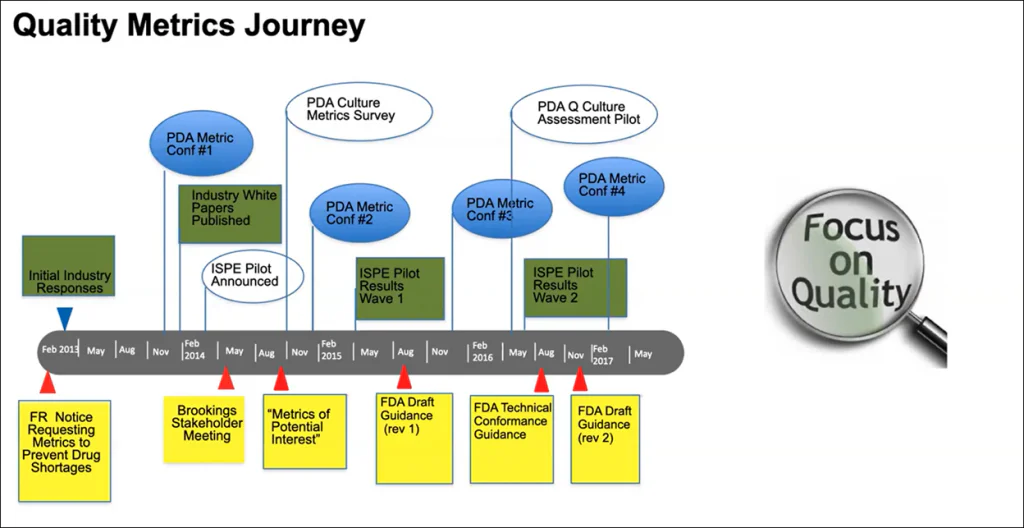
The groundwork to achieve this realization started with the adoption of Title VII, Sections 705 and 706 of the Food and Drug Administration Safety and Innovation Act (FDASIA). It has been over a decade since Dr. Woodcock revealed her vision to establish quality metrics used to determine a manufacturer’s ability to provide quality products to the patient.


QA Metrics


So how far have FDA and the industry come in establishing a set of quality metrics applicable to the pharmaceutical industry? The aforementioned sections of FDASIA gave FDA the ability to establish criteria to perform a risk-based FDA inspection of bio/pharmaceutical manufacturers. Further, a certified auditor request certain documents be provided in advance or, in some cases, in lieu of inspections.


Quality Control Metrics


The FDA next published a notice in the Federal Register asking for assistance from industry in developing a strategic plan and quality metrics to prevent drug shortages. FDA’s objective seems to be to reduce companies’ regulatory burden allowing for innovation while protecting the public health.


Quality Metrics in Manufacturing


In response to the Federal Register notice, several manufacturing organizations have made recommendations to the agency on what they perceived as quality metrics. Organizations that independently participated in the development of quality metrics include:


  • Parenteral Drug Association (PDA)
  • International Society for Pharmaceutical Engineering (ISPE)
  • Generic Pharmaceutical Association (GPhA)
  • Pharmaceutical Researchers and Manufacturers of America (PhRMA)
  • Consumer Healthcare Products Association (CHPA).


These organizations held conferences and wrote white papers to define what specific quality metrics would be appropriate. Representatives from the above organizations, covering all aspects of the pharmaceutical industry, met to try and come to a consensus. Additionally, how quality metrics are used as an indicator to provide high quality medicine to patients.


First Pass Quality


The outcome of the meeting resulted in acceptance rate, product complaint rate, confirmed out-of-specification rate, and recall rate. The proceedings from the meeting clarified that the “consensus set of metrics are somewhat rudimentary, and provide limited information about the culture of quality at a given organization”.


According to the published proceedings, “many [participants] remarked that a strong quality culture is a critical component in driving the system and processes that underpin the quality control and assurance infrastructure at an organization. However, quality culture is also difficult to capture through metrics.”


Supplier Quality Metrics


It was at this point where industry took off in different directions; PDA and ISPE have been the most engaged organizations in subsequent efforts. ISPE designed and asked members to participate in a pilot program for quality metrics, while PDA held a conference on quality metrics that focused on how to define a mature quality culture.


The metrics used in the ISPE Quality Metrics Pilot Program include the consensus metrics from the Brookings meetings as well as others. Some of the unique metrics used by ISPE in their pilot include timeliness of annual product quality reviews, recurring deviations rate, corrective action and preventive action (CAPA) effectiveness rate, process capability, and quality culture.


Quality Assurance Measurements


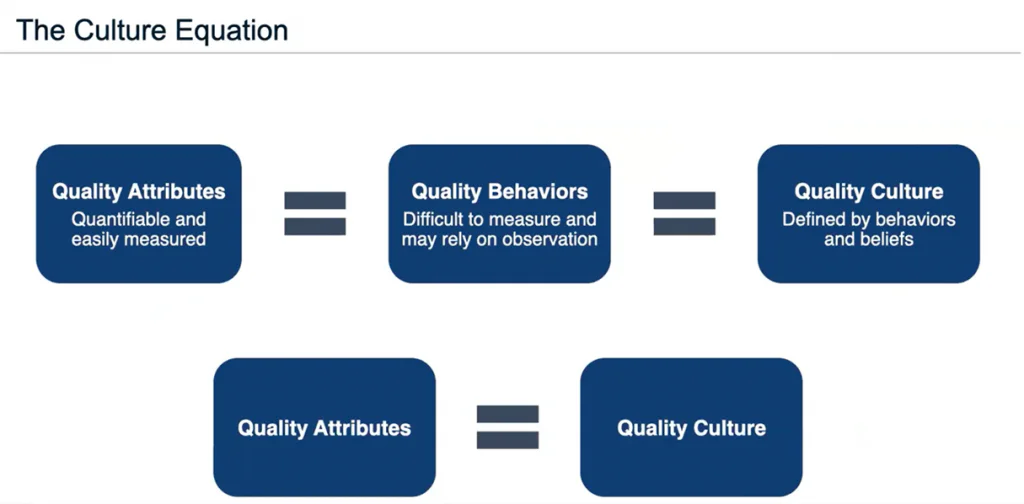
A PDA quality culture metrics conference that was held focused on metrics in assessing quality assurance. The hypothesis for the meeting was that mature quality attributes have a strong relationship to positive quality culture behaviors. The consensus from the meeting was that measuring a quality culture is subjected and defined by a set of behaviors, beliefs, values, attitudes, and governance and that quality assurance goes beyond traditional quality systems in creating a framework for a strong quality culture.


Training Metrics Scorecard


PDA divided quality systems into three types:


  • Traditional
  • Enhanced
  • Other


PDA defined traditional quality systems by traditional metrics including deviations, complaints, CAPA, etc. Enhanced quality systems were defined as those that had advanced programs such as risk management, knowledge management, quality by design, quality manual, etc. The other quality systems were much more evolved and have programs like shared quality goals, rewards and recognition programs, and cost of quality awareness programs, etc.


Types of Quality Metrics


Conference attendees defined the top five mature quality attributes as the following:


  • Program to show how employee’s specific goals contribute to overall quality goals
  • Program to measure, share, and discuss product quality performance and improvement from shop floor to executive management
  • Continuous improvement program/plans with active support of CEO and corporate management of quality management systems (QMS)
  • Program that establishes quality system maturity model and action plan and tracking to measure progress
  • Internal survey measuring a company/site quality culture.


FDA Quality Metrics


Meanwhile, FDA presented the following metrics for measuring a quality system:


  • Lot acceptance rate (the number of lots rejected by the establishment in a year divided by the number of lots attempted by the same establishment in the same year)
  • Right-first-time rate (the number of lots with at least one deviation by the establishment in a year divided by the number of lots attempted by the same establishment in the same year)
  • Product quality complaint rate (the number of complaints received by the manufacturer of the product concerning any actual or potential failure of a unit of drug product to meet any of its specifications, divided by the total number of lots released by the manufacturer of the product in the same year)
  • Invalidated out-of-specification (OOS) rate (the number of OOS test results invalidated by the establishment, or contracted establishment in a year divided by the total number of tests performed by the establishment in the same year).


Future of Quality Metrics


So what is the future of quality metrics? The most important part of the puzzle is important to keep in mind that there are no perfect answers and collaboration is imperative. The concept of unintended consequences needs to be addressed so everyone is on a level playing field. Data trending can be more valuable in determining the robustness of a quality system than direct comparisons. Finally, an open and honest quality culture will drive the data integrity of quality metrics.


Article Details


qa qc


BioPharm International
Vol. 28, No. 5
Pages: 41-41


To begin the Regulatory Compliance Associates scoping process today, please enter your information in the blue form below and click the submit button at the bottom of the webpage. You may also email us at [email protected].


Q: I am a quality professional in charge of investigations. Sometimes our company has trouble coming up with the root cause for some of our investigations. Can you provide some advice on how to effectively determine root causes for our investigations?


root cause A: You aren’t alone in your concerns regarding the inability to identify the root cause when performing an investigation. The regulations for the United States and the European Union require investigations to be performed when deviations in the manufacturing process happen.


The ultimate goal of these investigations is to determine why something went wrong, what caused it to go wrong, and how to address the issue and prevent its recurrence. The analysis is simply a systematic problem-solving approach used for determining the cause of a deviation that occurred during processing and identifying solutions to prevent reocurrence.


Root Problem


The following are a few general considerations to keep in mind while considering root problem and conducting investigations:

  • One size investigation doesn’t fit all situations. Simple errors require simple documentation while more serious deviations require broader investigations.
  • The best tool to have is inquisitiveness. Ask yourself how far this deviation could extend.
  • Widen your perspective. Look for ways to relate, not separate, similar issues.
  • Human error is rarely a sufficient cause.
  • Always verify information or your instincts and never assume you are correct without proper data to support your instincts.
  • Applying these general rules throughout the investigation should help you get to the true cause of the deviation.


Root Cause Analysis


Once you have recorded the basics of the deviation, you can begin the root cause analysis portion. Many tools can assist you through this process. Choosing the right analysis tool is crucial in assuring the process ensures the true root cause has been identified. Keep in mind there is no one right tool to use for analysis, and the tool you choose does not need to be complex to achieve its purpose.


Some of the available tools include brainstorming (e.g. 5why analysis, the 5whys, 5 y’s analysis), flowcharting, and fishbone diagrams. Using some or all of these tools in combination during an investigation is practical and necessary. Most investigation teams start off with the brainstorming technique.


5 Why’s


The primary concept behind the 5 Whys is simply asking you and/or your team the question “Why?” five times. This technique is ideal for flushing out root issue theories about the deviation. However, it may not be ideal for compiling the data needed to prove the correct root cause has been identified.


Using the 5 Whys or the fishbone diagram in conjunction with brainstorming adds assurance you have found the true root cause. Further, gathering the supporting data should help you validate the process and if your answer is correct.


Determining Root Cause


Root cause analysis tools can be detrimental to the outcome of an investigation if they are improperly used. It is important to train people on the proper use for a root analysis. The information needed for identifying root causes in any investigation should be appropriately documented.


The first piece of information to be recorded should be a thorough and precise description of the event. A timeline that discusses the process up to the time the deviation occurred should be established in the root cause tree.


Corrective Action


Once the event and timeline are properly recorded, a number of questions should be asked during root cause problem solving. For example, each investigation must address the following elements to ensure the true root cause and corrective action is identified:


  • Historical evaluation; have we seen this before on this or other products? Have we seen this before on this line? Have we seen this before with these operators?
  • An evaluation of the process or methods used by the Operations team
  • An evaluation of the materials used during the operation
  • An evaluation of the equipment/instruments used during the operation
  • An evaluation of the personnel involved
  • An evaluation of the laboratory analysis associated with the operation
  • A review of the validation information for the operation.


Root Cause Investigation


Whatever tool/tools you use to identify the root cause of the problem, they need to be supported by a robust, well-documented investigation. Some of the critical elements needed to be addressed in the root cause investigation include a clear, concise description of the issue that delineates what happened. Additionally, when it happened in the process and an accounting of who was involved or observed the incident is also critical.


In any case, other information to be addressed in the investigation is a record of the immediate action that was taken to contain the situation. The investigation should be broad so that all possible causes of the deviation can be captured and evaluated as the possible root cause.


Root Cause Corrective Action


Finally, investigate all possible causes so they can be properly eliminated and reveal the systemic root cause. Remember that there could be multiple answers to find the root cause. If you keep these investigational elements in mind and thoroughly document the investigation, you should have no trouble identifying the true root cause of a deviation. Further, your team can apply the findings from the root cause tools and implement corrective action needed.


Article Details


Pharmaceutical Technology
Vol. 43, No. 2
Page: 54


To begin the Regulatory Compliance Associates scoping process today, please enter your information in the blue form below and click the submit button at the bottom of the webpage. You may also email us at [email protected].

As the pharmaceutical market continues to expand globally, regulatory affairs in pharma is making an effort to harmonize global standards and to protect the complex supply chain. Pharma companies and regulatory consultants are also making an effort to stay compliant with worldwide guidelines in an ever-changing regulatory environment. 


There is a lot of effort on the part of drug companies to research and make sure they are compliant with the various worldwide manufacturing regulations. For the most part, GMP requirements are rather consistent worldwide.


The differences that exist can be managed by applying the strictest requirement to the products that would ensure its acceptance across the globe. Issues may arise when a standard applied to the technology is changed and the new requirement is stricter than its predecessor. Companies need to fully understand their product in the development stage to be able to address the ever-changing regulations.


Pharmaceutical Regulations


Regulators, government agencies, and standard-setting organizations can be the catalyst for the development of new and innovative therapies as a response to world health crises. There are a variety of ways a regulatory affairs consultant in pharma can get involved with these initiatives.


There are many trade organizations that offer workshops and conferences that address some of the unmet medical needs facing the global community. Companies should make sure they are on the mailing lists for these organizations so they can receive notice of upcoming conferences and choose the ones that seem most pertinent to their business. These conferences not only [provide] cutting-edge information, but they also offer an opportunity for people to network and discuss issues and potential solutions to them.


Manufacturers must navigate the regulatory science waters to ensure their products meet the proper requirements. In the following sections, industry experts give advice about regulatory affairs in pharma, standards development, and responding to regulators. 


Pharma Regulatory


Global regulatory affairs standards and monographs, such as the United States Pharmacopeia and the European Pharmacopoeia (Ph. Eur.), can help pharmaceutical manufacturers get their products approved by regulatory bodies and into patients’ hands. According to a US Pharmacopeial Convention (USP) spokesperson:


USP’s public standards can help facilitate the application process by establishing standards that sponsors reference in applications and licenses to demonstrate the quality, purity, and strength of their drug products.


International standard-setting organizations emphasize regulatory affairs in pharma and the importance of ongoing industry collaboration. USP encourages pharma companies to participate in the development of public standards. Susanne Keitel, director of the European Directorate for the Quality of Medicines and Healthcare (EDQM), which is in charge of the Ph. Eur., would like to see medical regulatory affairs from industry become more active in the development of pharmacopeia standards, such as nominating experts to participate in developing standards.


The knowledge and experience of experts from pharma companies is crucial to ensure robust, state-of-the art, validated, and affordable test methods and monographs, and relevant standards worldwide. For example, no pharmacopeia could do without the contributions and collaboration within industry when it comes to pharmaceutical packaging regulations. This cross-functional industry collaboration is both helpful and necessary.


USP’s Global Health Monographs program addresses treatments for major health concerns, such as malaria, or unmet needs in underserved communities outside of the United States. Pharmaceutical companies can help by donating specifications and materials. Any regulatory consulting firm working with clients on USP for pending monographs is another way industry expertise can be leveraged.


“These are monographs or monograph revisions for certain substances that have been submitted or are intended to be submitted to FDA for approval but have not yet received approval. By approaching USP early in the process, USP can more readily close the gap that otherwise might exist between FDA approval and the publication of an applicable USP monograph,” says a USP spokesperson.


Pharmaceutical Regulatory Affairs


The pharmaceutical regulatory affairs behind researching and developing a regulated product for distribution is a long and expensive process. By regulatory consultants working closely with regulators and pharma companies, it can make the product approval process smoother.


The approval process can be improved when sponsors work hand in hand with regulatory agencies during the approval process, answering reviewers’ questions as they arise, and providing timely information regarding manufacturing processes and quality control strategies.


“In my opinion, sponsors can be more open with FDA during the development process,” says Mukul  Agrawal, PhD, and member of the Bioequivalence Focus Group steering committee at the American Association of Pharmaceutical Scientists (AAPS).


“There are apprehensions about how FDA will perceive that and what if FDA asks for something unreasonable? To the contrary, FDA is helpful and appreciates the efforts of sponsors in doing things right and according to FDA’s expectations. While there is a need for balance in these interactions, it is better to maintain open communication with FDA. It is also possible to have a dialog with the FDA about their expectations, and if data can be provided to support justification for doing something differently, it should be discussed and agreed to with them.”


Pharmaceutical Regulatory Consulting


Not providing enough information about manufacturing and regulatory affairs in pharma can complicate FDA’s evaluation of a drug product.


Not providing information in the proper format (e.g., electronic common technical document [ECTD]) and providing insufficient or incomplete information …  not responding in a timely fashion to requests for additional information or answering questions posed by regulatory agencies [are mistakes companies make].


Using a pharmaceutical regulatory consulting firm can help the understanding of what’s expected by the regulatory body.


“The most frequent mistake in my opinion is that the companies find out too late in the process that some things were not done according to FDA expectations as described in the various guidance documents and then try to use a Band-Aid approach. It is important to have input from all departments within the company from the earliest stages of development to prevent mistakes,” says Agrawal.


FDA Pharmaceutical Regulations


One of the important tasks that most regulatory agencies worldwide perform is facility inspections. Companies that operate in the United States or import products into the US are inspected by FDA. An FDA spokesperson states:


“During an FDA inspection, investigators are seeking to verify that facilities are operating in a state of sufficient control according to current good manufacturing practice (CGMP) guidelines.” 


Companies that operate worldwide should be aware of pharma regulatory compliance and what international inspectors look for during an inspection.


Although there is a common approach for regulatory inspections by all agencies that are members of the Pharmaceutical Inspection Co-operation Scheme (PIC/S) in the US, European Union, and Asia, their focus and expectations may differ. For example, some agencies might look more closely at pest control, whereas others may be more concerned with adherence to local pharmacopeias. In addition, agencies such as the US FDA will investigate potential criminal conduct, while other agencies verify compliance with the regulations.


Pharmaceutical Regulatory Compliance


Facility compliance inspections may cause pharma regulations anxiety for leadership, but being prepared can make the process pain free.


The best way to prepare for an inspection, whether it is in the US, EU, or Asia, is to know your operations. Regulations for pharmaceutical companies are fairly clear when it comes to understanding your quality system, completing past investigations, and following standard operating procedures (SOPs). Personnel should be prepared and relaxed and employees should not change their behavior to accommodate the regulators.


An FDA spokesperson concurs:


To prepare for an FDA inspection, facilities should review the CGMP guidelines and assure they are in compliance with those guidelines. FDA offers several resources to help facilities better understand and adhere to CGMP guidelines, such as public outreach through presentations at national and international meetings and conferences to explain the CGMP requirements and latest policy documents.


Working with a Pharmaceutical Regulator


There are a variety of things pharma companies can do when inspections must comply with regulations, including having good controls, compliance processes, training, and systems up front.


There is less preparation effort if the company is in a good compliance state. Making sure everything is done correctly day in and day out will always help meet the expectations of your pharmaceutical regulatory. Make sure that the SOP system covers all the activities needed to undertake the type of ongoing manufacturing operations at the site.


EU Pharmaceutical Regulation


Global experts in pharmaceutical manufacturing regulations often suggest performing internal audits prior to an inspection by regulators can help based on EU pharmaceutical regulation changes.


Internal audits … may be helpful in identifying areas that may pose problems during the inspection. Practice audits can challenge logistics and allow personnel to go through an ‘inspection’ without the pressure of an official EU regulatory inspection. You want [personnel] comfortable and unflustered when the regulators are viewing them performing their jobs or asking them questions about their job functions.


During the actual EU pharmaceutical investigation, the best way to make the impact on your employees pain free is to make sure you talk to them before they enter into the inspection room or before they are to be observed by the EU inspectors. This is not to coach them on what to say but rather to calm them down before they are observed or questioned by the inspector so they can interact in a positive way with the inspector. Companies should also identify and address any potential pharmaceutical regulatory compliance risks prior to inspections.


Knowing your risks allows you to better prepare for inspection questions.  You also need to be seen as addressing the risks that you have found.


cGMP Regulations for Pharmaceutical


Companies should plan the logistics of an inspection including the location for the inspection, personnel escorts and contacts, and preparing any communications or documents the inspectors might require. Pharmaceutical regulatory consulting companies like RCA conduct assessments as if an inspector may want to see:


A copy of the current organizational chart, a copy of the titles of your SOPs, a list of your corrective actions and preventive actions (CAPA)/investigations, and a list of your complaints. The rule of thumb is to go back approximately two years for the CAPA/investigations and complaints.


Addressing findings from previous inspections is also imperative.


Inspectors review previous inspection reports and expect that prior commitments have been completed. Most importantly, any documents the inspectors ask for should be provided in a timely manner. Bottom line, the sooner you get the regulators the information they want, the sooner they will be able to wrap up the inspection. If you are organized and forthcoming in your information your inspection will go much smoother.


Companies may benefit from providing a quality assurance consultant with an overview of their facilities. This can increase the success of training programs and process revisions before an inspection takes place.


Recognize that the inspector is dropping into your environment with little context. By providing them with the context they will be better able to understand what you do and ask better questions. It is recommended to use storyboards to describe processes, situations, or decisions. Storyboards can be useful in meeting pharma regulations because they help the inspector understand the situation rather than forcing the pull information from one or more documents.


While preparation may be key, there are obvious things companies should avoid to meet pharmaceutical regulatory compliance during an inspection, such as lying, being evasive, or arguing with inspectors.


“The inspector will want direct answers to direct questions and to talk to the people doing the job, not management,” says Lerner. The regulatory investigator is there to ensure GMPs are being followed, and avoiding the inevitable may make things worse. “Sometimes companies try to hide situations from investigators or provide misleading answers.  A good investigator usually asks the same question in different ways and in multiple areas and will uncover misleading or untrue answers,” says Madsen.


Medical Affairs in Pharmaceutical Industry


Responding to violations observed during an inspection is equally important across the entire Medical Affairs team.


Respond quickly but thoughtfully.  For a 483, point out any situations that the investigator may not have fully understood.  It’s best to clarify and resolve these during the inspection, if possible, before they are put in writing.


Regulatory affairs in pharma should take FDA 483 observations seriously, but be careful not to overcommit.


When the inspector returns, they expect the commitments to be completed and could escalate actions if not completed. Systemic corrections should be put in place. Companies should make sure to address how you are going to maintain a compliant status once the change has been implemented and have a plan for any violations that cannot be immediately fixed. 


Addressing root causes of observed violations is key. It is often the most critical element of the assessment a quality control consultant would provide to you about lingering NCR’s:


The agency really wants to see that you are addressing the root cause and that you are addressing this issue across the organization. As an example, if the inspector found that a particular non-conformance (NCR) was not investigated fully, it is equally important to both explain what happened in that instance (and why you made specific decisions) and what you are doing to prevent future insufficient NCR investigations.


Properly addressing violations cited by investigators on a FDA 483 form may help companies avoid receiving a warning letter from FDA. When FDA does send a warning letter, companies should take their response seriously.


The warning letter itself is an indication that the company has been out of compliance for some time and has been unsuccessful in solving their compliance issues. Probably the most conservative response to a warning letter is to outline your plans to improve your quality system and commit to bringing in an unbiased third party (consultant) to review and make sure your plans are executed appropriately and will eliminate your systemic quality problems. If you are at the warning letter stage, it means you have been unable to solve your problems and you need help. Make sure you communicate this in your response.


This advice rings true. In recent warning letters, the agency has often suggested a company obtain outside consultation in resolving GMP violations.


Government Regulations on Pharmaceutical Companies


Ensuring the safety and efficacy of medicines doesn’t stop when the drug is approved by regulators and distributed to the public. Inefficient manufacturing practices, GMP violations, negligence by ingredients or service suppliers, and other complex issues can all have an impact on the safety of a drug product. Both industry and regulators have a continued responsibility to ensure the safety of patients.


One aspect of pharma’s part of this responsibility is keeping regulators informed of any adverse events associated with a drug product. An FDA spokesperson states that pharmaceutical companies that “market prescription and nonprescription drug and biological products in the US must review all adverse event information they obtain or otherwise receive from any source, and report adverse events to the FDA’s Center for Drug Evaluation and Research as described under the regulation or section of the Food, Drug, and Cosmetic Act that is applicable to the type of product they market.”


“Adverse event reporting is a serious matter and should not be taken lightly,” says Schniepp. A well-managed and properly staffed pharmacovigilance unit is key, according to Moreton. “[The unit should have] clearly defined responsibilities and report in to the senior management (not sales and marketing),” says Moreton.


Pharmaceutical Regulatory Intelligence


Companies should report pharmaceutical regulatory intelligence behind adverse events via the regulatory affairs in pharma established by notified bodies. When in doubt, it is better to be conservative and report by the earlier of multiple deadlines. Providing complete information required by FDA pharma regulations is just as important as is maintaining accurate records. It is best to initiate the process for adverse event reporting as soon as regulatory affairs in pharma companies become aware of of the event to prevent any delays in filing.


A very common mistake made by regulatory affairs in pharma is waiting too long to report the event. Many companies are tempted to wait until they have completed the investigation into the event before reporting its occurrence. By contrast, regulatory bodies like the FDA are clear on adverse event reporting.


“These entities must ensure that the adverse event reports they submit to FDA are transmitted in an electronic format the FDA can process, review, and archive.  In addition, these entities must have written procedures for the surveillance, receipt, evaluation, and reporting of postmarketing adverse event to FDA as well keep records of all known adverse event information,” states an FDA spokesperson.


Conclusion


Regulatory affairs in pharma should be used as a tool to help manufacturers develop and market their products and that regulators and their regulations should not be feared or avoided. Being mindful of regulatory requirements, especially European regulations for pharmaceutical industry, can make the regulatory approval process much smoother. Maintaining GMPs and having well-trained personnel will ease the stress of regulatory inspections. 


It is clear that both industry and regulators have the same ultimate goal: provide safe and effective treatments to people who need them. Understanding and nurturing the industry-regulator relationship fosters innovation in regulatory affairs in pharma and ensures patient safety worldwide.  


Article Details

RCA


Pharmaceutical Technology
Vol. 40, No. 12
Pages: 20-24


To begin the Regulatory Compliance Associates scoping process today, please enter your information in the blue form below and click the submit button at the bottom of the webpage. You may also email us at [email protected].

Products must be manufactured by following guidelines and in accordance with appropriate medicine manufacturing regulatory requirements, even during a pandemic and crisis management, says Susan J. Schniepp, Distinguished Fellow, Regulatory Compliance Associates.


Q. I am in the quality department and am responsible for investigations, and I have been working from home due to the COVID-19 pandemic. The investigation standard operating procedure (SOP) requires me to perform face-to-face interviews with people and to complete the investigation within 90 days. Working remotely to conduct the interviews is taking much longer, and I am afraid I’ll miss my deadlines. Could I eliminate the interview requirement until I am able to return to the facility?


A. I certainly understand the challenges of trying to conduct remote face-to-face interviews and the need to try and streamline processes during times of crisis, but now is not the time to take unnecessary, undocumented shortcuts with any of your medicine manufacturing procedures.


medicine manufacturing

My recommendation is that you step back from your frustration with the situation. Focus on the elements you need to conduct a thorough pharmaceutical manufacturing investigation and look at finding alternative means to fulfill the SOP requirements as defined in your contingency plan. If you do not have a contingency plan in place, you should immediately develop one and include appropriate risk-based information.


The European Medicines Agency has a guidance on the format for a risk management plan that might help you get started on this activity.


To determine how you might make your operations more efficient during crisis times, I further suggest you review the FDA’s guidance titled, Planning for the Effects of High Absenteeism to Ensure Availability of Medically Necessary Drug Products.


The guidance document states “this guidance is intended to encourage manufacturers of medically necessary drug products (MNPs) and any components of those products to develop contingency production plans to use during emergencies that result in high absenteeism at production facilities” … “The guidance provides considerations for the development and implementation of a plan for production of MNPs during a crisis, including specific elements that should be included in the plan.” 


The medicine manufacturing contingency plan you develop should include information regarding the company’s prevention and risk mitigation processes.


The guidance states “these preventative measures can include steps to prepare personnel such as:


  • “Educating employees on topics such as, in the case of a pandemic, personal hygiene (hand washing and coughing and sneezing etiquette), social distancing, and appropriate use of sick leave
  • “Encouraging employees to get immunized as appropriate by providing information on local vaccination services or by offering on-site vaccination services, if reasonable
  • “Providing information for and encouraging employees to develop family emergency preparedness plans
  • “Reviewing CGMP [current good manufacturing practice] regulations regarding appropriate sanitation practices and restriction of ill or sick employees from production areas (see 21 CFR [Code of Federal Regulations] 211.28)”.


The final guideline also recommends “that manufacturers, when evaluating activities that might be reduced in frequency, delayed, or substituted by a suitable alternative, first identify and consider activities that are intended by the CGMP regulations to provide controls not connected with the manufacturing of any specific batch. Examples include:


    • “Production equipment routine maintenance
    • “Utility system performance checks and maintenance (e.g., air temperature, lighting, compressed air)
    • “Environmental monitoring of facilities such as cell culture, harvesting, and purification rooms during production
    • “Stability testing for certain drug products and components
    • “Periodic examinations of data and of reserve samples”.


In addition, the guideline also recommends that:


“If the demand for MNPs cannot be met by the measures described above, manufacturers can consider reducing activities that are more directly connected with batch manufacturing or a product accept/reject decision provided that they have a documented rationale or risk assessment to show that the proposed changes will not unacceptably reduce assurance of product quality. Examples include:


  • “Not requiring second-person verification of activities for less critical steps (though we recommend a self-check of work)
  • “Reducing the number of samples for labor-intensive laboratory testing
  • “Forgoing an in-process test to assure adequacy of mix, particularly when making successive batches, where the risk is judged to be low in terms of drug safety and efficacy
  • “Delaying completion of deviation investigations of minor events.
  • “CDER [the Center for Drug Evaluation and Research] recommends that in taking such measures, firms plan to carefully monitor indicators of product quality to note any unfavorable trends or shifts as a result of the implementation of the Plan. CDER also recommends that firms retain samples for testing at a later date in cases where testing is reduced or omitted because of lack of resources”.


While it is important to act quickly and efficiently during a medicine manufacturing crisis, the process and product must still be manufactured in accordance with appropriate regulatory requirements. Before you make any drastic changes to SOPs or eliminate process steps you need to read the FDA guidance document, prepare a proper risk assessment, and justify why the removal of the requirement from the SOP does not impact patient safety and product quality.


The documentation you provide and the assessments you perform to address some of the extraordinary situations facing you and your colleagues. In the effort to produce necessary medical drugs, preparation should give you confidence that you have acted appropriately and within the regulations to fulfill patient needs.


medicine manufacturing

 
Susan J. Schniepp
Volume 44, Issue 6, pg 62, 60


To begin the Regulatory Compliance Associates scoping process today, please enter your information in the blue form below and click the submit button at the bottom of the webpage. You may also email us at [email protected].