
















Author: Brandon Miller

RCA Pharmaceutical Supply Chain Consulting Services


The best way to maintain healthy business practices and get ready for an FDA audit is through training and preparation. Training employees and executives throughout your organization can lead to improved data storage and a better understanding of why proper storage is so essential for your business. Our services can help you maintain quality compliance within all aspects of your business, from design and manufacturing to packaging and distribution. These services include:


Assessments 


The best thing you can do to avoid a compliance crisis is to take preventive measures that will locate and remedy any outstanding issues. At RCA® Inc., our pharmaceutical supply chain consulting experts have decades of experience in both regulatory compliance program strategy and execution. RCA’s healthcare consulting Experts will help you measure your quality system based on global regulatory markets to assess any process weaknesses and opportunities to improve.


Our range of compliance consulting services includes:


  • cGMP & Pharmaceutical Manufacturing
  • Quality Infrastructure
  • PAI, Validation
  • Facilities and Maintenance
  • Laboratory (GLP)
  • Process Assessments to Streamline and Optimize New and Existing Systems.


Audits 


Periodic regulatory audits are necessary to ensure the continued compliance of your organization. An internal audit from a pharmaceutical supply chain consulting 3rd party can help your perspective when it comes to a regulatory audit. Our experienced team of ASQ-CQA and RABQSA-certified auditors is available to perform a range of internal audit services, including:


  • Supplier
  • API
  • Contact Manufactures (CMO)
  • Internal
  • Quality Systems
  • Baseline
  • Verification
  • Clinical (CRO) and Clinical Manufacturing
  • Data Integrity
  • 503A & 503B
  • Combination Products


Regulatory Agency Response 


Unfortunately, compliance crises do happen, and they can have a lasting impact on your business if you are unintentionally caught off guard. Regulatory Compliance Associates pharmaceutical supply chain consulting Experts can assist you in developing a customized response & plan of action to help remediate the effects of a regulatory warning letter. Our compliance and regulatory services team is here to provide the technical consultant guidance you need most during this time, with response solutions for:


  • FDA Form 483
  • Warning Letter
  • Consent Decree
  • Import Bans


Preparation, Training, and Inspection Readiness 


Sitting back and hoping for your next regulatory inspection to go well isn’t an option — you need to comply with regulations and actively prepare. RCA® will help you thoroughly prepare for inspections with an extensive range of business consulting services, mock inspections, and other medical consulting readiness solutions:


  • Mock Inspections
    • Back Room/ Front Room set-up and process
    • Inspection Analysis & Report
  • Response Letter Assistance
  • Proof Book Development
  • Business Relations (Leadership Development Training)
    • Corporate Regulation Examples
      • Regulatory Law
      • Regulatory Board
      • Legal Compliance
  • Industry Relations (Leadership Development Training)
    • Types of Regulation
      • Medical Regulations
      • Security Regulations
      • Cybersecurity Regulations
      • Data Compliance Regulations


Data Integrity


Training:


  • Good Documentation Practices (GDP) Centered on How the Data is Recorded, How to Correct an Error, and How to Document the Reason(s) for the Error
  • Annual Good Manufacturing Practice (GMP)
  • Investigations
  • Corrective Action and Preventive Action (CAPA)


Consulting:


  • Comprehensive Audits
  • Development of a Remediation Plan to Address any Risks and Weaknesses Identified During the Audit
  • Assistance with Execution of the Remediation Plan


In the event of an audit, the information gathered during the manufacturing of pharmaceuticals—from its raw stages through launch and everything in between—will be used to defend the product’s use once it’s been released for patient use.


To begin the Regulatory Compliance Associates scoping process today, please enter your information in the blue form below and click the submit button at the bottom of the webpage. You may also email us at [email protected].

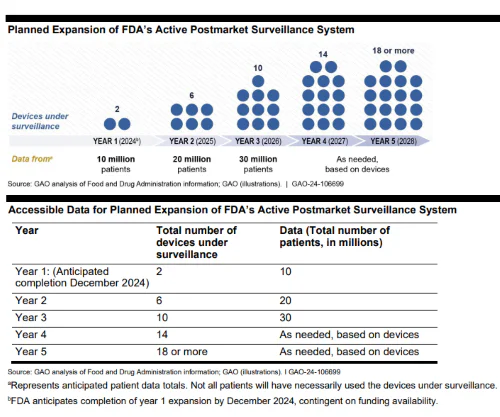
The U.S. Government Accountability Office (GAO) publishes independent audits at the request of consumer advocates, watchdog groups, and members of the United States Congress. One of the most recent publications involved the U.S. Food and Drug Administration (FDA) post market surveillance process, including an analysis of management & oversight across agency functions and employees.


Additionally, the post marketing study uncovered hurdles FDA encountered during the medical device audit. The final 27-page report included feedback on whether the agency was efficient while handling problems and protecting data integrity. These details offer a snapshot of how a regulatory body operates in real time across the life science industry, and where efficiency could be examined.


What is a Post Market Surveillance System?


The U.S. Food and Drug Administration (FDA) has an approved regulatory framework & database (MAUDE) designed to connect consumer complaints and compliance adverse events to a product code and medical device manufacturer. This post market surveillance system (PMS) is a validated FDA regulatory process designed to increase transparency and continuous improvement.


Adverse Events


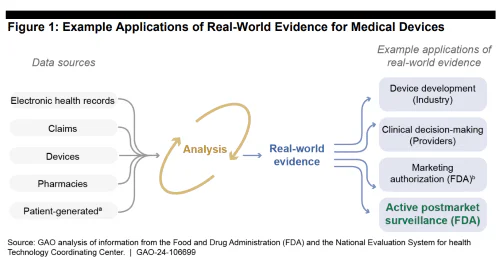
A post market surveillance system is the market listening mechanism between real world evidence and analysis. Software platforms are used as a global harmonization resource for monitoring adverse events (e.g. poisoning, adverse reaction) across countries, devices & the cycle of patient life.


Additionally, the post market surveillance system is designed to help collect HIPAA-compliant patient data & medical device product ID info in a single source of postmarket truth. Patent-generated evidence (e.g. FitBit, Apple Watch) is a growing data source HCPs recognize at the point of care which medical device manufacturers could use during product design & commercialization.


Patient Safety


Additionally, the post marketing surveillance process uses incoming data to search for patient safety trends proactively. The future may include post marketing requirements that help educate the population’s health, and when label changes should be communicated to consumers. Finally, when a negative safety trend begins to accelerate, FDA may consider if the marketing approval of the product should be removed.


What is a Unique Device Identifier (UDI)?


The unique device identification (UDI) is an exclusive code related to a specific medical device. Each UDI promotes a transparent identification system that helps life science employees trace a product using a numerical & alphabetical format on the device label. Each unique device identification number includes a mix of production and device identifier (DI) data based on the manufacturing process. Further, the elements of the production identifier (PI) portion of the UDI code include this information on each device label:


  • Manufacturing date
  • Manufacturing batch number (or lot number)
  • Device serial number
  • Device expiration date
  • Distinct identification code (for combination products)


FDA mandates that any patient documentation needed to uncover the root cause of a medical device’s problem be included in the safety profile risk analysis. Ideally, the risk analysis would also contain information from a patient’s EHR health records and/or the payer’s claim data or pharmacy data. Both of these are widely considered reliable post market surveillance data sources.


A full transcript and highlights of the GAO report can be found here


To begin the Regulatory Compliance Associates scoping process today, please enter your information in the blue form below and click the submit button at the bottom of the webpage. You may also email us at [email protected].

The cannabis consulting market is moving very quickly to support new businesses and many competitors are seeking the consumer’s attention. Right now, there’s no doubt that CBD-based products are getting plenty of attention. Gummy bears and other edibles are making the news, and the media is filled with stories about the powers of CBD oil.


At the same time, there are increasing calls for cannabis regulation from federal and state agencies as well as consumer groups. How can you ensure customers find you, and how can you grow your own successful business? The following cannabis consulting tips can help:


  • Know the rules: You cannot be successful if regulatory agencies shut you down or discredit your business model. If you manufacture or market CBD products, familiarize yourself with Current Good Manufacturing Practice (CGMP) regulations, state laws and FDA rules. A cannabis consulting expert can help you determine if the product is a supplement or drug, and follow the general guidelines for that type of product.
  • Offer quality and consistency: Create systems to ensure your products are consistent. Avoid switching vendors, suppliers and partners to allow you to develop a product you can stand behind. A cannabis consulting firm can leverage testing to prove the quality and maintain control of the manufacturing process.
  • Keep it real: Only advertise or market product benefits if you have hard data for that product. The FDA and other agencies have been sending warning letters for non-compliance to CBD and related businesses based on marketing alone. Even if you are creating a quality product, you need to make sure you can stand behind every word of your marketing. Stay consistent in branding and keep providing quality to your customers.
  • Get ready for regulations: Even if you are successful today, you need to stay agile for the upcoming regulatory changes. Keep alert to changes in state bills and new rules created at the federal level. Start documenting and testing now and invest in processes that back up your product. The more transparent and data-focused you can afford to be, the more prepared you may be for coming law changes.
  • Focus on customers: Customers are getting plenty of contrary information about cannabis and CBD. They may hear about the beneficial properties of these products, but they may also be hearing warnings from other sources. Consider how confusing this may be and offer quality information and reassurance about your products, backed up by testing so customers know they can trust you. Arm your audience with the information they need to buy from you.


Pave the Road for Cannabis Success


Do you need a partner for your business success? Regulatory Compliance Associates helps companies just like yours stay compliant. We help you address regulatory and quality issues and allow you to focus on growth while we stay on top of regulatory and FDA changes. Contact us at Regulatory Compliance Associates to learn what we can do for you.


To begin the Regulatory Compliance Associates scoping process today, please enter your information in the blue form below and click the submit button at the bottom of the webpage. You may also email us at [email protected].

A recent update for Health Canada and EMA’s data anonymization program included instructions for filling out the new clinical template and a more granular look inside the harmonized Anonymization Report (AnR). Further, the goal of this regulatory harmonization program is to make EU and Health Canada identification of specific patients from characteristics in the data set as highly unlikely as possible.


What is Data Anonymization?


Data anonymization is a method for presenting research data in a way that reduces our ability to identify the individuals who participated in the clinical study. Best practices for Clinical anonymization commonly target how to protect the trial participant’s data and clinical trial drivers, such as:


  • Device manufacturer
  • Drug manufacturer
  • Device trade name
  • Drug trade name


Patient data and re-identification can also be linked to outlier conditions to be considered:


  • Protocol design vs. advanced methods
  • Special populations
    • Rare disease state
    • Ultra rare disease state


Finally, consideration must be given to small trial populations that can limit the intended scope of patient disclosure. For example, since there are fewer patients in the trial, any form of incomplete anonymization often leads to an increased risk of re-identifying a trial participant.


Regulatory Compliance


Two unique regulatory standards are being used as guidance for drug sponsors & data anonymization clinical teams:


  • Health Canada
    • Public Release of Clinical Information (PRCI)
  • EMA
    • Policy 0070 Clinical Data Publication (CDP)


Finally, an important benefit of anonymization is the ability to proactively distribute scientific data to reduce duplicate clinical trials. Building public trust in products coming to market is often accomplished by increasing the awareness of clinical successes. The healthcare industry’s ability to scrutinize the data against both standards to be durable, reliable, and anonymized over time will help researchers improve clinical outcomes.


Drug Sponsors


The regulatory process will now include drug sponsors submitting only one anonymization report for both Health Canada and EMA regulatory submissions. The updated report format for both Health Canada and EMA uses a mix of predefined, multi-choice questions and verbatim response questions. Additionally, the format is optimized for clinical data sharing between each regulatory body to improve transparency and product efficacy. 


A drug sponsor’s anonymization methodology would include a risk assessment that shows either a qualitative or quantitative calculation (or a combination based on clinical strategy). Redacted copy options include both Personal Information that satisfies Health Canada regulatory and Protected Personal Data for the EMA regulatory format. Finally, direct identifiers of both the clinical report signatory and principal investigator should be listed with the rationale for each clinical approach used.


Adverse Events (AEs)


Indirect identifiers are anonymization report categories often about clinical data specifically related to the trial (or product used in the clinical trial). This information is not enough to stand on its own in terms of independent study variables. Instead, the data analysis is dependent on the clinical trial to connect the differences between patient information and an actual participant.


All adverse events (and terms related to the adverse event) should be recorded in these formats:


  • Summary level
    • Tables and/or descriptive summaries
  • Participant level
    • Written patient narrative based on AEs


Special Populations


Select clinical trial participants may fall under the anonymization category of special populations. These participants often include a sub-set audience that is impacted by either the patient’s life events or stage of life while participating in the clinical trial. Special populations often warrant a different level of clinical segmentation that should be documented and analyzed in the final reporting submission.


Further, their current health condition may warrant creating a clinical subset of participants for regulatory approval, such as:


  • Trial specific examples:
    • Pediatric
    • Geriatric
  • Patient specific examples:
    • Pregnant women
    • Breastfeeding women.


In the context of anonymization, these special populations may need a unique reporting strategy since they often do not share all key characteristics of the trial population.


To begin the Regulatory Compliance Associates scoping process today, please enter your information in the blue form below and click the submit button at the bottom of the webpage. You may also email us at [email protected].


During the COVID-19 pandemic, the U.S. Food and Drug Administration (FDA) spent more time than usual approving Emergency Use Authorization (EUA) authority for medical organizations. Fast-approving more than 100 medical device and testing kits in such a short amount of time is hardly standard practice for the FDA. Yet these FDA approvals during COVID-19 were essential to protecting public health and safety.


EUAs come with their own set of benefits and risks, as well as a detailed process to determine whether the devices in question are fit for use in emergency situations. As a result, it’s important to understand what this process is and how regulatory standards apply during unprecedented times.


Find out if a EUA is right for you.  Contact RCA Now →


FDA EUA


Emergency Use Authorization is a FDA program that allows health professionals to temporarily use an unapproved medication, medical device or medical procedure to save people’s lives. This law exists under section 564 of the Food, Drug and Cosmetic Act and is designed to protect medical patients with life-threatening illnesses who lack access to alternative treatment.


euaEUA authority is more common recently due to the widespread threat of COVID-19, which has infected millions of people worldwide. The FDA granted EUA approvals for a variety of items, including vaccines and new testing methods.

 

Regulatory & EUA Approval


Before a company can receive regulatory approval for a FDA EUA, certain criteria must be met. First, there needs to be a state of emergency, such as a threat to public health like COVID-19. The secretary of homeland security often makes this decision if there is a military threat, while the secretary of health and human services can declare a public health emergency.


Once the proper officials have declared a state of emergency, the FDA can decide whether or not to approve a drug, device or procedure based on:


  • The effectiveness of the unapproved product
  • The availability of alternatives
  • Risk to benefit analyses


For example, if a device is still being tested as a test kit for COVID-19 and it’s the only option to maintain supply, it can receive temporary approval from the FDA. This condition can apply if no other successful options are available. Most importantly, if product shortages are preventing care to patients in need.


EUA Benefits and Risks


The main benefit of an EUA is that it has the potential to save lives during public health emergencies by easing some of the restrictions under 510(k) submissions. It’s a temporary measure, giving health professionals the ability to administer unconventional treatment and go through the steps to have it long-term approved later.


Before approving a treatment for the EUA program, the FDA needs to conduct an analysis of the benefits and risks of Emergency Use Authorization. This process is challenging because of the discrepancies between cases. For example, one device might be in a different stage of approval than another. Subsequently, manufacturers may be sending in real time clinical data that varies based on similar devices.


Medical Supply Manufacturers


Weighing the positive effects of the device against the possible risks to patients can be difficult too. Healthcare manufacturers may be working with minimal or inconclusive data while seeking fast approval for their products. This situation puts heavy pressure on officials to make smart, informed decisions that will save as many people as possible.


The FDA is working to update and address new policies so manufacturers can continue to roll out life-saving assets. Some of the FDA guidance available are those that were left over after Ebola and the SARS epidemic years ago. For instance, the FDA offers guidance for absenteeism to account for people on sick leave. Guidelines also cover ways to handle social distancing while still adhering to regulations and maintaining productivity.


To begin the Regulatory Compliance Associates scoping process today, please enter your information in the blue form below and click the submit button at the bottom of the webpage. You may also email us at [email protected].

Supply chain management is delicate — it only takes one “broken link” in the chain to significantly impact every aspect of a business’s operations. In a time when a pandemic is raging across the globe and wreaking havoc on manufacturing, maintaining an efficient, avoiding supply chain interruptions is more challenging than ever.


Pharmaceutical companies, medical device manufacturing, and a host of other industries are seeking ways to avoid costly interruptions by tightening their supply chains. In this post, we’ll offer some solutions your organization can consider implementing to prevent disruptions.


Need help Optimizing your Supply Chain?  Talk to our Experts →


Manufacturing Location


During the last century, businesses started looking to move their manufacturing operations to geographical areas where they could take advantage of lower labor costs. Companies in the U.S., for instance, began shifting production to Mexico, and eventually, India and Asia.


Logistics Management


While these plant relocations provided substantial cost savings for many years, several factors have conspired to reduce or eliminate the potential benefits. For example, COVID-19 has resulted in multiple plant closures and disrupted logistics management around the world. Growing political unrest in several nations is another contributing factor. It pays to periodically re-evaluate your global supply chain to determine whether it’s still cost-effective or increasing your risk of interruption.


Supply Chain Analytics


Supply chain interruptions

Are your manufacturing processes compatible with modern supply chain analytics and automation resources? As technology continues to improve, automation can provide a more practical and affordable alternative for a pharma company in many cases.


One of the most significant advantages of supply chain automation is the opportunity to integrate your systems with larger suppliers. By partnering with conglomerates that have access to numerous resources and advanced technologies, you’ll reduce the likelihood of a supply chain disruption within your operations.


Sourcing Opportunities


Relying on a single supplier or limited supplier base can leave you vulnerable if a problem occurs. Proactively seeking global supply chains that can replicate the services of your core suppliers can help you to make a fast, seamless shift if the need arises. It’s a reliable way to safeguard your company against disruptions resulting from unexpected shutdowns and similar issues.


Supply Chain Visibility


Too many big pharma companies lack end-to-end supply chain visibility. By gaining a better understanding of every aspect of your chain, you can anticipate where a breakdown is likely to occur and take the appropriate corrective measures. The process will also help you develop a contingency plan in case a disruption occurs.


Continuous Improvement


Even top pharmaceutical companies find it’s not always possible to avoid an interruption, even when leveraging manufacturing automation. When a disruption does occur, conduct a thorough supply chain audit to determine the cause. Use the information you obtain to prevent the situation from happening again. Make sure you document your response procedures based on pharmaceutical industry standards and make them a part of your future contingency plan.


To begin the Regulatory Compliance Associates scoping process today, please enter your information in the blue form below and click the submit button at the bottom of the webpage. You may also email us at [email protected].