
















Archives: Published Articles

Medical Devices


When a medical product fails in the field, everyone suffers — not just the patient, but also the manufacturer and its employees, investors, suppliers, and even competitors. No one wants a product failure, least of all the liable company for its safety. Faced with a quality investigation crisis, the manufacturer has three priorities: (1) protect patients; (2) resolve the problem as quickly as possible; and (3) prevent the problem from recurring.


Any product failure threatens a huge loss of value, above and beyond liability, to the manufacturer. If investors lose confidence and share price falls, enterprise value is destroyed. Then, as the company dedicates resources to resolving the problem, their other jobs — such as new product development — don’t get done (or, at best, don’t get done as quickly).


Risk Management


Since innovation is the beating heart of the medical device industry, any delay of a new product launch can cost a manufacturer millions; time really is money. All the more reason that quality investigation speed is so important in fixing any product problem.


Yet, many companies are not really prepared for product failure because they lack a crisis playbook. Through our work in helping companies investigate and resolve product failures, Regulatory Compliance Associates and The Science Cooperative (Chicago, IL) have gained the following insights about what works (and what doesn’t) in managing a product crisis.


“First Responders”
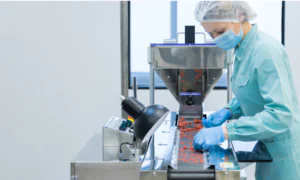
 

quality investigationA problem is identified as serious when field events indicate a trend beyond isolated incidences. At that time, the company’s leadership has to make a few decisions: Should an official notice be released? Should the product be recalled? Everywhere or only in some markets? Should production be stopped? In multiple or select plants?


Prompt action generally contributes to good will and positive publicity during a quality investigation. But the challenge is a deficit of facts at this stage since the forensic investigation itself hasn’t started.\


Standard Operating Procedure


In putting together a crisis playbook, a company should begin with guidelines and policies to direct the first responders in evaluating the size of the threat and the appropriateness of various options for response, depending on the apparent scope and severity of the problem.


For example, if a product is one component in an assembly, perhaps the best response is for multiple supply chain owners to work together to find the optimal fix for the problem. Among other issues that could be decided in advance would be choosing the “point man” for making that happen.


Risk Assessment


Of course, a crisis playbook would also help business leaders evaluate the cost of alternative responses. Say the chance of the company’s product being the cause of the crisis is 20 percent and pulling it off the market would cost $500 million: what’s the optimal strategy for moving forward?


Scenario-based planning provides a context for weighing alternatives and options during a quality investigation. But above all else, the first responders would want to stop patient harm; protecting the safety of the patient population comes first.


Functional Forensic Teams: Divide & Conquer


After the first responders have reviewed the situation and decided there is cause for escalation, it’s time to identify an investigation leader/crisis manager, an investigation leader, and the functional forensic team(s). An attorney or senior executive with strong project management skills is a good choice for crisis manager; also, each team needs at least one a member with strong organizational skills.


Product Validation


The crisis playbook should cover roles and responsibilities — including potential action checklists — for multiple functional forensic teams across the quality investigation. It’s feasible that a crisis might require teams in R&D, sciences, manufacturing, distribution, supply chain, human resources, legal, regulatory, quality, environmental, sales/marketing, and communications, as well as sub-teams for representatives from affected countries and from government affairs.


What expertise would each team require? What would be each team’s scope and focus? Most important, how should the teams interact, coordinate activities, and measure progress toward milestones and a final resolution? A crisis playbook should provide answers, which would vary case by case.


Project Management


Good project management skills are fundamental to managing the investigation process effectively and efficiently. Although the teams are all working on the same problem, each requires its own plan and milestones.


Role-based accountability for project and team-specific organization, documentation, schedules, data management, and reporting can be decided well in advance of a crisis. It’s best that the leaders of the crisis management team meet daily to assure clear, timely, cross-functional communication and to agree on next steps.


Resources: Knowledge & “Know-How”


If valuable resources are taken away or distracted from their jobs to any significant degree, real and measurable enterprise value is destroyed. So, while leaders and experts from each affected corporate function play a vital role in an investigation, it may be a smart business strategy to bring in specialists to support the effort with their expertise and experience.


In addition to minimizing damage to the company’s value and brand, the quick building up of expertise also speeds up the forensic process itself. One client asked both the FDA and EU notified bodies to participate in an investigation; as a result, the company tripled its lab capacity and bolstered credibility with shareholders and the marketplace.


FDA Investigation


Independent consultants can add muscle to any FDA investigation, while buttressing investor confidence. As an added benefit, because they’re beyond the “politics” of the enterprise, they can often give employees the freedom to speak without repercussion. Also, outside resources with the right knowledge and “know-how” will be well versed in Corrective and Preventive Action (CAPA) processes and can use this expertise to streamline and speed up the investigation.


Roadmap: Imagine a Practical Path Forward


Each team needs a directed course of action based on scenario planning. Given a set of variables that would vary by product and case — including (but not limited to) the severity of the crisis, geography, financial liability, and the possibility of substitute products — what steps should each team take to contribute to the problem identification, resolution, and ongoing prevention? 


The steps required of each team can be captured in “punch lists” to minimize redundancy and duplication of effort. Then, it’s relatively easy to assign responsibility for each item on the list. If the product is used in more than one country or region, the work of the corporate teams needs to be mirrored by local teams, and everyone’s findings need to roll up to the top.


Root Cause Analysis


Perhaps one of the most critical points in the quality investigation roadmap — and the one that’s most often missing — is a “stop” point. The longer an investigation goes on, the more enterprise value it can destroy.


So, in the beginning, it is important to decide: When is the problem solved? Is it when the contaminant is found? When the process in the factory or the supply chain is fixed? Or when the product is reintroduced to the market? Among these inquiries is another with implications for continuous improvement: Why didn’t the QA processes in place (for design, manufacturing, and other functions) detect the potential failure?


Scope control is a fundamental component of good project management. In most cases, there’s no need to parse the problem beyond a practical solution. The crisis playbook should include prototype action plans, checklists, work streams, decision processes, schedules, milestones, resource requirements, budgets, and documentation.


Steps for Post-Crisis Resolution:


  • Assure that all commitments made have been honored.
  • Update all prevention measures, including software procedures and policies, as appropriate.
  • Debrief the crisis management teams to mine “lessons learned”.
  • Ensure appropriate closure communication with key stakeholders, including regulatory agencies, media, customers, investment community, and employees.


Strategic Communication


From day one, the investigation leader/crisis manager needs to share information about commitments, expectations, and progress. Communication — internally with employees and externally with investors, supply chain partners, regulatory agencies, the public, and sometimes competitors — is critically important.


The overall process needs a “point person” for communication, as does each team, whether at the corporate or local level. The role of each communication channel — including press releases, internal newsletters or briefs, media contacts, video, and letters to shareholders and the investment community — can be planned well in advance: a crisis playbook can take chaos out of the process and enable the company to put its best foot forward. In communication, the current best practice is a dedicated portal, a single source for real-time updates on the investigation, typically accessible through the company’s Website.


Crisis Management


The old proverb “a stitch in time saves nine” captures the value of a crisis playbook: being prepared will save time and money down the road; most importantly, it could literally save lives. By being mindful of the components of effective and efficient crisis management — building up and deploying expert resources; coordinating and integrating parallel work streams; following and documenting rationalized processes — a company’s leadership can be confident in its preparedness to handle a product failure to the satisfaction of everyone’s best interests.


Article Details

Complete article published in Medical Design Briefs.
 

To begin the Regulatory Compliance Associates scoping process today, please enter your information in the blue form below and click the submit button at the bottom of the webpage. You may also email us at [email protected].

Cybersecurity Risk Management for Medical Devices

Medical device connectivity creates significant benefits for patients and healthcare organizations, but it also expands the potential attack surface for cybersecurity threats. This article emphasizes the importance of addressing cybersecurity during device design and development, rather than treating it as a late-stage consideration. Vulnerabilities that remain unresolved before market launch can provide entry points into healthcare networks and potentially compromise data confidentiality, data integrity, device performance, and patient safety.


A strong cybersecurity strategy begins with secure by design principles and clearly defined security requirements. Manufacturers should incorporate cybersecurity expertise into the design process, identify vulnerabilities across diverse technologies and infrastructure, and apply risk-based controls to address potential threats. Protective systems that can detect, respond to, and recover from threats provide an additional layer of risk control, while labeling and instructions represent a less robust form of mitigation.


Cybersecurity must also be managed throughout the medical device lifecycle. Legacy operating systems, supply chain dependencies, emerging vulnerabilities, and evolving threats can create new risks after commercialization, making ongoing monitoring, patching, and security updates essential. The article highlights resources including IMDRF guidance, AAMI TIR57 and TIR97, the NIST Cybersecurity Framework, OWASP resources, and FDA cybersecurity recommendations as tools manufacturers can use to establish and maintain effective cybersecurity risk management.


Read the full article: Cybersecurity Risk Management for Medical Devices

Introduction


The intent of this cGMP article is to stimulate more conversation and catalyze more improvement across our industry relating to the repeat problems we have seen for literally decades. During research for the article the author discovered the top 10 FDA Form 483 observations have mostly remained unchanged over the last 23 years. However, they likely have been the same going back further in time, but FDA 483 trend presentations could only be found going back to 2000.


The main questions to consider when reading this article are:


  1. Why are the top 10 FDA Form 483 issues mostly the same the past twenty-three years? What is/are the cause(s)?
  2. How can we, as an industry (regulators and regulated), solve these systemic repeat observations?


Methods


The data and thoughts detailed in this article were derived from the following four areas:


1. Data utilized and presented during the Parenteral Drug Association’s Annual meeting. The data was obtained from RCA’s partner, Redica Systems, and was mined for the top 483 observations between 2018 to 2021.


  • Information was compiled by utilizing Redica’s Annual Trend Report with the following search criteria: Year range = 2018 to 2022 + Human Drugs/GMP + Form 483 + All Firms Globally


2. Research, data compilation and analysis on 483 trend presentations given by the FDA going back to 2000.


  • Information was compiled based on internet searches for prior FDA presentations on FDA Form 483 observational trends (aka Top 10 observations within the specific year).


3. A highly informal, anonymous survey of 30 industry professionals. The individuals selected were known to the author and had to fit the following criteria:


  • They were ex-FDA employees who worked in the pharmaceutical CGMP program within the Center for Drug Evaluation and Research (CDER) and/or the Office of Regulatory Affairs (ORA – FDA’s inspectorate). They had to have worked for more than two pharmaceutical companies (after FDA) and have over 20 years of professional experience, OR
  • They are current industry quality and/or operational professionals who have worked for more than two pharmaceutical companies and have over 20 years of professional experience.


4. The author’s tacit knowledge gained from working as an executive at the FDA and an executive at both generic and brand pharmaceutical firms, as well as a consultant to dozens of firms.


Discussion


What and Why


Please do not get caught up in the numbers. They are important, but the important takeaway from this article is our collective industry continues to be cited by the FDA for the same observations year after year. The same 10 observations pop up again and again going back to at least 1999, over 23 years. In those 23 years, we’ve seen a rapid increase in knowledge; better equipment; systems; processes; therapies; and technologies to name a few.


It’s definitely been a volatile, uncertain, complex, and ambiguous (VUCA) world we’ve been living in and will continue to be. With all the rapid advancements in processes, products, and services how are we still seeing the same CGMP observations in our facilities year over year? What can we do as an industry to change these repeat observations?


Background


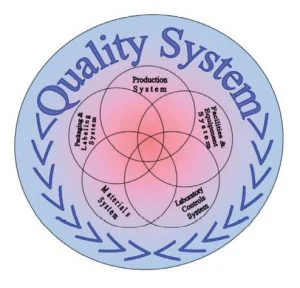
FDA’s 2006 Guidance for Industry, Quality Systems Approach to Pharmaceutical CGMP Regulations” details a six-system inspection model. The six systems (1. The Quality System; 2. Production System; 3. Packaging and Labeling System; 4. Laboratory Controls System; 5. Facilities and Equipment System; and 6. Materials System) are all interconnected.


In fact, FDA states in the guidance: “the quality system provides the foundation for the manufacturing systems that are linked and function within it. The quality system model described in this guidance does not consider the five manufacturing systems as discrete entities, but instead integrates them into appropriate sections of the model.” The data presented below will be divided into six systems for ease of presentation.


cGMP


Data Analysis


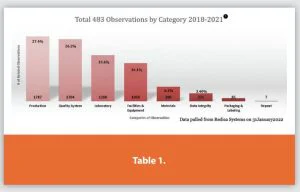
During the PDA Annual Meeting, the author gave a presentation entitled “Analyzing Global FDA 483 Observational Trends 2018-2021. In the presentation top observations within each of the six systems were detailed. Table 1 below details the total 483 observations by category/system from 2018-2021. 


cGMP


The data shows the Production System accounted for the largest percentage of total observations (27.4%) during the reporting period. However, the Quality System and Laboratory System are close runners-up at 26.2% and 19.4%, respectively.


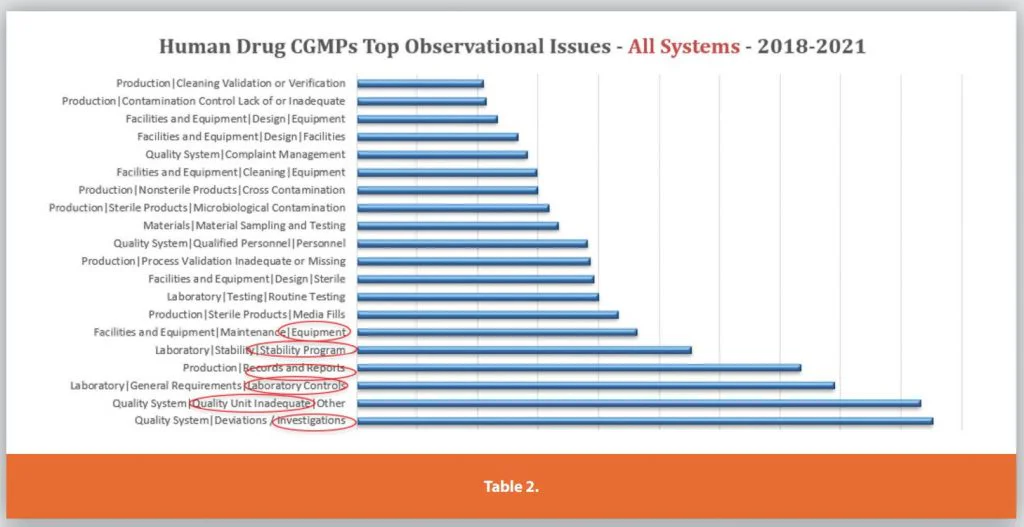
Table 2 depicts the top observational issues (i.e., what were the top observations within the different systems) across all systems for the same time period.


The table lists the System (i.e., one of the six systems) then the secondary category of each observation, and then the tertiary category (if available). For example, the top issue lies in the quality system, with the secondary category of inadequate deviations and tertiary breakdown to inadequate investigations.


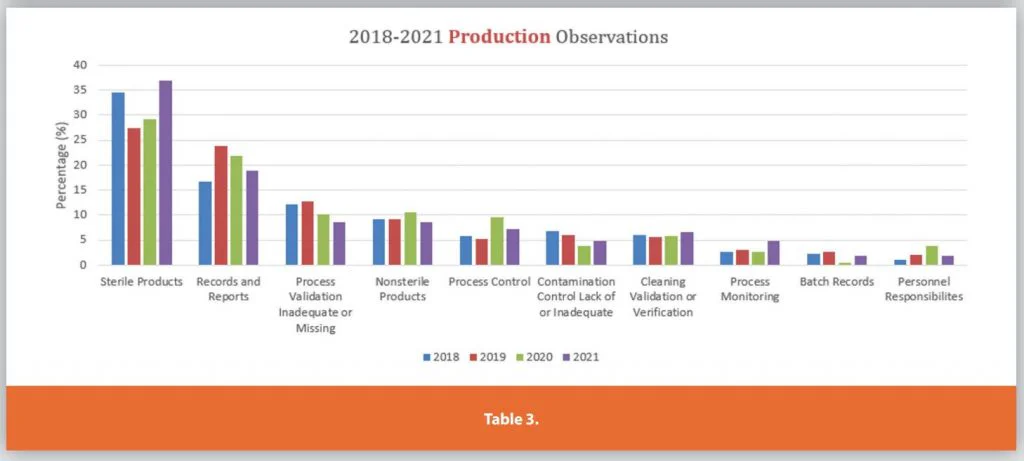
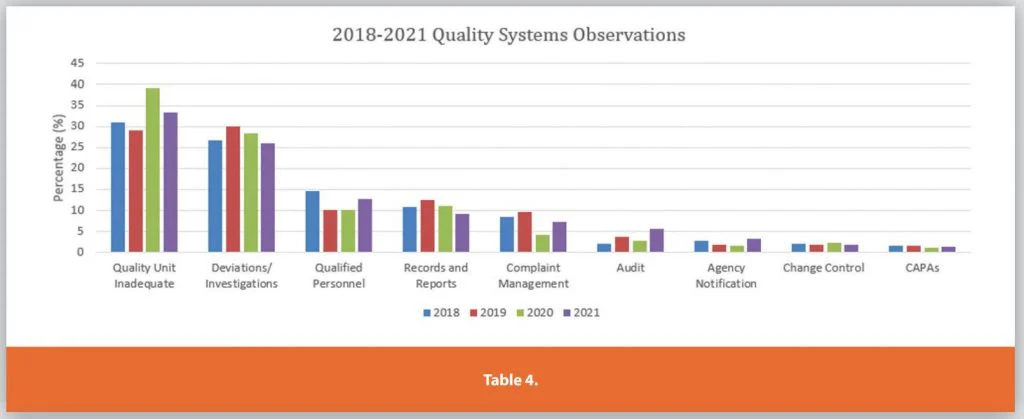
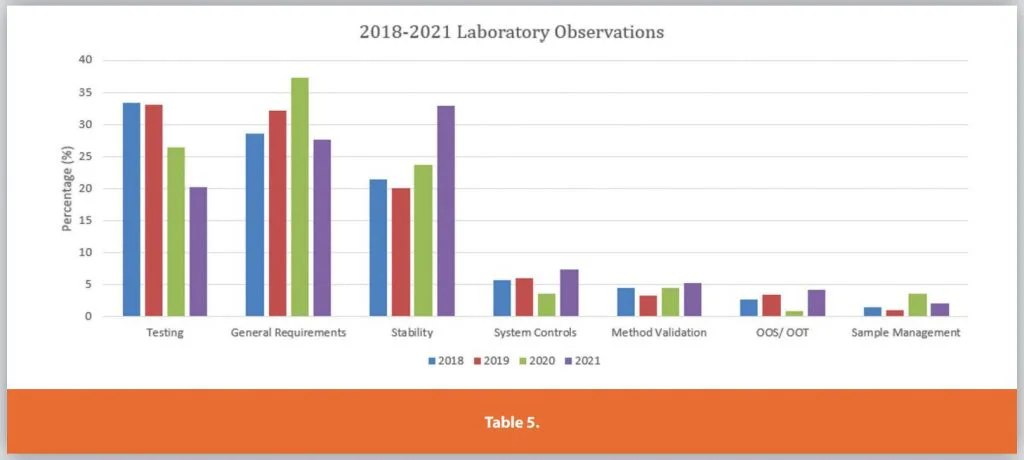
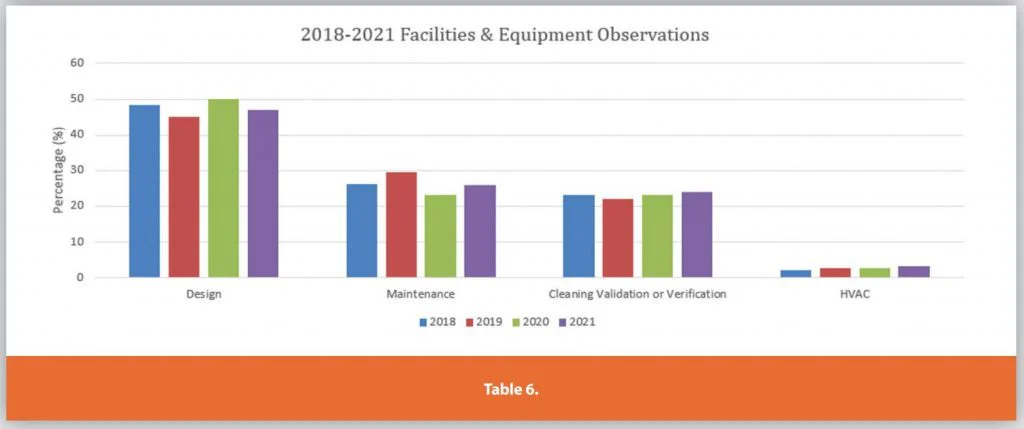
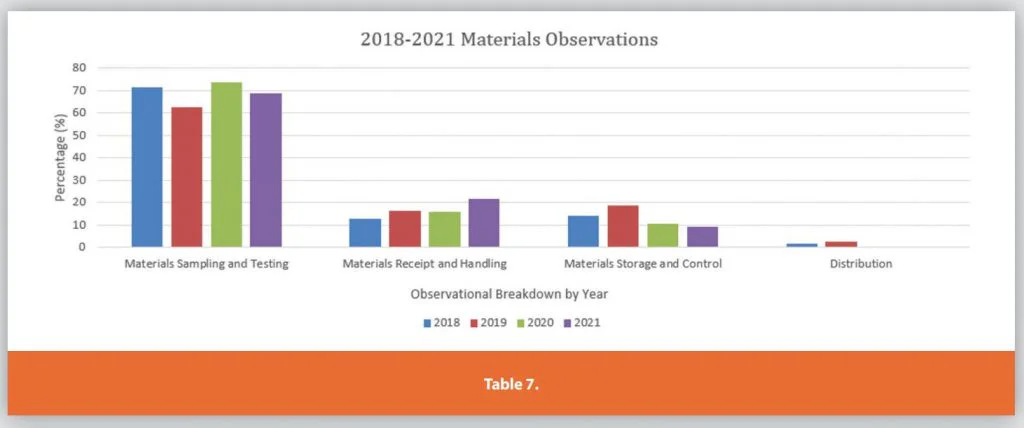
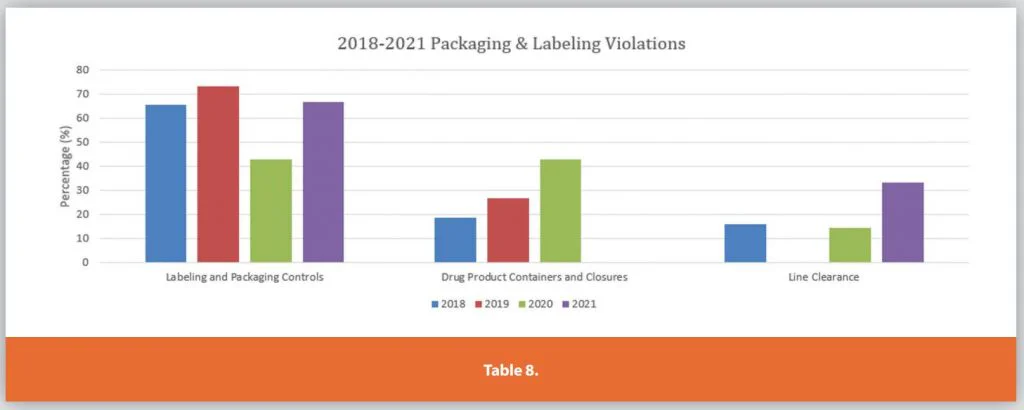
Each of the Six Systems is further detailed in Tables 3-9.


These graphs only depict the past four years. During the research for the article internet searches for FDA presentations on the Top 10 483’s per annum were compiled and analyzed. The data showed the same top 483 observations remained mostly unchanged over the past 23 years.


For example, in 1999 an FDA official from the San Juan District Office gave a presentation entitled “Current 483 Issues”.3 Within the presentation the official noted the top 483 observations were laboratory controls, investigations, stability issues, calibration issues, environmental controls, records, procedural deficiencies, equipment and NDA Field Alert Reporting. Fast forward close to 23 years later and the observations have largely remained the same, as depicted in the PDA presentation.


Another FDA officer gave a presentation in 2015 detailing, among other things, the top observations from 2004 to 2014 (Table 9) mostly remain the same.


cGMP


cGMP


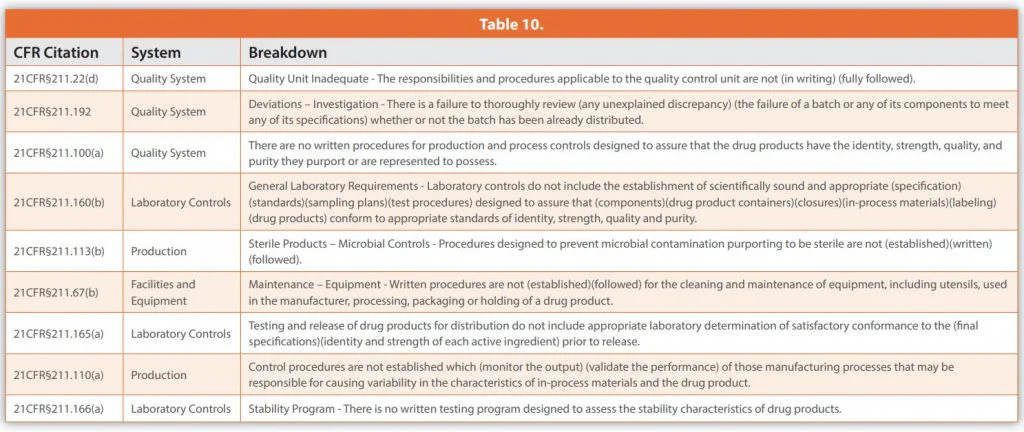
Table 10 below displays the top common observations over the past 23 years. The rankings (i.e., 1 to 10) are not important year over year because, while the top 10 observations may change from one ranking to another, these common observations routinely remain in the top 10.


Potential Causes and Call to Action


In April 2014 Harvard Business Review (HBR) published an article entitled Creating a Culture of Quality. In the article, the authors detailed the results of their study which included 60 multinational corporations, an extensive review of research, and a survey of more than 850 employees. The quality culture study garnered a great deal of attention in our industry upon publishing.


Subject matter experts prominently displayed some of the key cGMP study quotes such as “A company with a highly developed culture of quality spends, on average, $350 million less annually fixing mistakes than a company with a poorly developed one.”


cGMP


cGMP


cGMP


cGMP


cGMP


cGMP


In addition to this captivating statistic the HBR authors outlined four (4) essentials that drive quality in organizations:


  • Leadership Emphasis – Managers are told that quality is a leadership priority and walk the talk.
  • Message Credibility – Messaging is delivered by respected sources, is appealing to associates, and is easy to understand.
  • Peer Involvement – peers routinely raise quality as a team topic of discussion and hold each other accountable (i.e., a speak up and accountable culture).
  • Employee Ownership – Associates understand how quality fits with the job and are empowered to make quality decisions (ex: anybody can raise a deviation) and are comfortable (non-punitive) raising issues. Do you think you are following these cGMP concepts at your organization? What about the industry as a whole?


Informal Survey


To try and make sense of this problem, a very informal and anonymous survey was sent to thirty different colleagues. The colleagues were known to the author and were a mix of ex-FDA employees and industry. They also had to have worked at no less than two different pharmaceutical/ biotech companies (not including FDA) and have no less than 20 years of experience in quality, compliance, and/or inspections or audits.


cGMP


cGMP


cGMP


cGMP


The survey posed the same two questions noted at the beginning of this article, specifically:


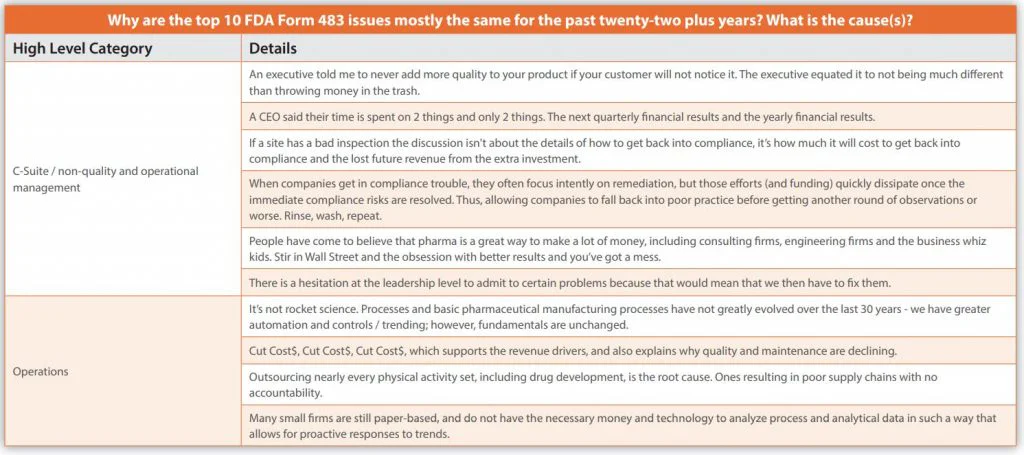
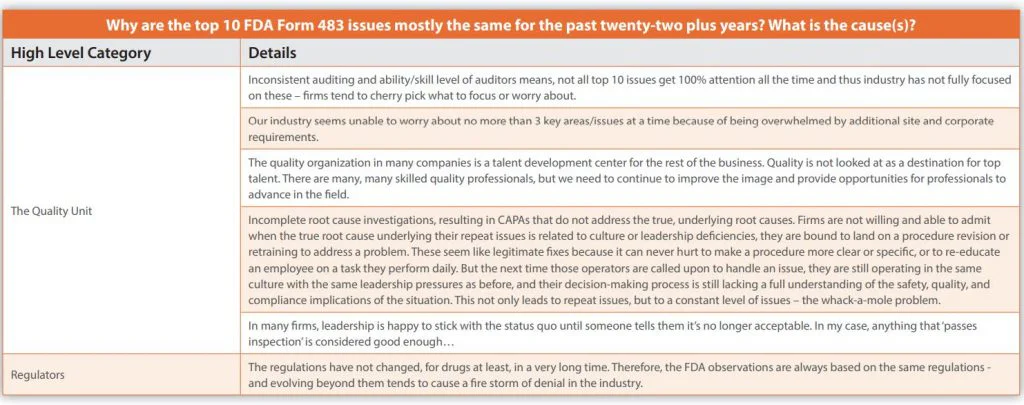
  • Why have the top 10 FDA Form 483 issues mostly the same for the past twenty-three years? What is/are the cause(s)?
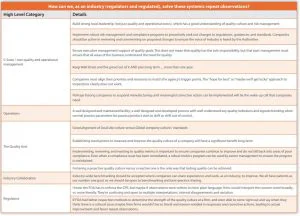
  • How can we, as an industry (regulators and regulated), solve these systemic repeat observations?


The results were telling and seemed to point to a deeper systemic issue, both at the line level of the firm, within the quality units, laboratories, operations and most importantly in the C-Suite. A sampling of the cGMP results is listed in the table below. You be the judge.


Conclusion


I do not profess to have the answer(s) to this problem. During my 25+ year career, I’ve seen a lot of very good CGMP programs and a lot of not-so-good CGMP programs. To be honest, I do not think one person, one firm, one trade organization, or one consultancy has the solution. It could be argued that the solution lies in our collective knowledge and experience.


I’ll leave you with one additional parting thought: In May 2007, FDA/ CDER Center Director, at the time, Dr. Janet Woodcock posted an update and message on the Agency’s Pharmaceutical Quality for the 21st Century,6 which kicked off in 2002. In Dr. Woodcock’s opening message, she astutely pointed out:


“As you know, FDA cannot meet the goals of the Initiative alone. The success of the Initiative has been predicated on active participation and input from experts in industry, academia, government, and consumer groups…. The journey has just begun. There is still much to learn and innovations to incorporate into all our processes. We, in the agency, will continue to emphasize the importance of the Initiative and look forward to many more improvements in our regulatory processes for ensuring product quality.” 


This initiative started 20 years ago. The Top 10 483 observations have not changed in this same timeframe. Have we stagnated, improved or fell behind? This is something for the regulator and regulated to ponder and address – together.


References

  1. Guidance for Industry (fda.gov) QS Guidance
  2. FDA QS Guidance, pg. 7
  3. Current 483 Issues Diana Amador, Director, Science Branch San Juan District Office 1999
  4. Microbiological Inspections, Regulatory Investigator Update, Sharon Thoma, ORA National Expert Pharmaceutical Inspections, 2014 9th Annual Global Conference on Pharmaceutical Microbiology
  5. Srinivasan, Ashwin and Kurey, Bryan, Creating a Culture of Quality, Harvard Business Review, April 2014
  6. Pharmaceutical Quality for the 21st Century A Risk-Based Approach Progress Report | FDA


To begin the Regulatory Compliance Associates scoping process today, please enter your information in the blue form below and click the submit button at the bottom of the webpage. You may also email us at [email protected].

Q: My company is preparing to transfer in a new product to one of our manufacturing facilities. Previous technology transfer pharmaceutical projects have not always gone smoothly for us. How can I ensure that this transfer goes well?


A: This is a great question and frequently asked. It is important to understand the requirements for a successful technology transfer. These concepts are used when transferring product from a research environment to clinical trial manufacturing, a clinical-trial manufacturer to a commercial-product manufacturer, between company facilities, and/or to a contract manufacturer.


Let’s say that Company A wants to outsource the manufacturing of product to Company B, a contract manufacturer. Company B cannot perform all of the necessary testing associated with the product manufacturing and release, and they need to contract out some of the testing to Company C. In this case, the technology transfer would involve three parties who will need to be included in the technology-transfer process.


Tech Transfer


The questions to answer for a successful product transfer become:


  • Who needs to know what to have a successful transfer?
  • How do we maintain open lines of communication between all the involved parties?
  • How does this all get managed?

It is important for all parties to be engaged in the technology-transfer process, and because technology transfer can mean different things to different people, one of the first steps in the process should be to establish a common understanding of terms and definitions between all the parties involved. Without a common understanding and/or language, the technical-transfer activity can become confusing, frustrating, and ultimately, unsuccessful.


Tech Transfer Pharmaceutical


The Pharmaceutical Research and Manufactures of America’s Quality Technical Committee developed a good definition for technology transfer in 2003. They defined technology transfer as, “The body of knowledge available for a specific product and process, including critical-to-quality product attributes and process parameters, process capability, manufacturing and process control technologies, and quality systems infrastructure”. The objective of the transfer is to impart knowledge that will allow for smooth, continuous manufacturing of the product regardless of its stage in the product lifecycle. This knowledge includes not only what works but also what hasn’t worked.


Once a common understanding is established, the best way to ensure that you have a successful technology transfer is to maintain open lines of communication and develop a timeline that defines when crucial steps in the transfer will be performed. When any of the parties stop communicating or cease to share information, then the technology transfer will fail. It is important for all parties to maintain open communications through the technology-transfer activity.


Technology Transfer Examples


The following six technology transfer examples should be kept in mind as best practices:


  • Robust information exchange. Without a robust and transparent exchange of information the technology-transfer activity has the potential to be frustrating and delayed while people try to find a common understanding and locate necessary information crucial to the success of the activity.


  • Planning and project management. By having a good plan and project management tools, the technology transfer is more likely to be completed on time. Establishing realistic deadlines and scheduling the work to meet those deadlines will, again, contribute to a successful technology transfer experience.


  • Transfer of analytical assays. It is important to make sure all analytical methods are transferred and that the methods are validated. This helps ensure that the transfer was done correctly and that the site receiving the information can produce the product and analyze it without significant problems arising.


  • Small-scale verification at the receiving site. This activity helps keep the project on track. If the small-scale verification can be performed successfully, it is an indicator that the scale-up will go smoothly.


  • Pre-GMP engineering runs are desirable. These are not necessary but are desirable because they assure that the equipment being used is functioning properly.


  • GMP runs. This is the final step in the process validation and is necessary to confirm that the technology transfer was successful.


Technology Transfer Pharmaceutical


Many regulatory authorities reference the concepts of tech transfer in their respective regulatory frameworks. Volume 4 of the European Union’s Guidelines for Good Manufacturing Practice for Medicinal Products for Human and Veterinary Use makes multiple references to technology transfer.


In section 1.2, it states that GMPs apply to technology-transfer activities. Chapter 4 of the EU guidelines requires:


“… written policies, procedures, protocols, reports and the associated records of actions taken or conclusions reached, where appropriate, for the following examples … Technology transfer …”


Chapter 6 of Volume 4 has a section devoted to the technology transfer of testing methods. The last section of EudraLex Volume 4 that deals with technology transfer is Chapter 7 on Outsourced Activities. This section clearly states that there needs to be written material around transfer.


FDA Contract Manufacturing


FDA has chosen to address the issue of tech transfer in their guidance titled Contract Manufacturing Arrangements for Drugs: Quality Agreements. This guidance states that:


“A comprehensive Quality Agreement will provide specific terms related to the particular product or products involved” and “the Quality Agreement should include product/component specifications; defined manufacturing operations, including batch numbering processes; responsibilities for expiration/retest dating, storage and shipment, and lot disposition; responsibilities for process validation, including design, qualification, and ongoing verification and monitoring…”


The bottom line is that to have successful transfer you need to have a common understanding and language, a way to manage the various steps and information that are crucial to the product, and you need to maintain open communications between all the parties involved in the process.


Article Details


technology transfer


Pharmaceutical Technology
Vol. 40, No. 4
Pages: 92–94


To begin the Regulatory Compliance Associates scoping process today, please enter your information in the blue form below and click the submit button at the bottom of the webpage. You may also email us at [email protected].

Q. I work for a contract manufacturer, and I think we have robust CAPA systems. Sometimes we close our CAPAs before we have completed our effectiveness check due to the timeline needed to implement and measure the effectiveness of the preventive action. Occasionally, we fail our effectiveness checks, requiring us to reopen our CAPA. This creates a lot of concern during audits. Is there something I can do to prevent this from happening?


A. The key to CAPA systems lies in the thoroughness and quality of the investigation. Based on the limited information, it sounds like you are having trouble recognizing the root cause(s) identified during the investigation. The investigation process should make use of root-cause analysis tools designed to examine the impact of the equipment, process, people, materials, environment, and management on the identified non-conformance.


The investigation process should review each possible root cause; the investigators should either eliminate it or it should become part of the preventative action. As the elimination process progresses, the investigation will naturally and logically hone in on the root cause(s) of the non-conformance.


Any potential CAPA quality root cause that can’t be eliminated needs to be remediated. Most companies make the mistake of stopping too soon and not pursuing all the possible root causes that can’t be eliminated in the investigation stage


CAPA Records

It might help if we look at a situation where a probable root cause was identified but not pursued as part of the preventive action. The incident involved the detection of a discolored vial during inspection of lyophilized vials. The vials inspectors discovered several green-hued vials before the packaging phase of the operation.


What seemed to be a simple issue isolated to one batch grew and ultimately affected more than 28 batches produced over a two-month period. Several green-hued vials were discovered during inspection of a lyophilized batch of product that was produced on a 20-year-old automated line.


FDA Inspection


The inspectors that discover the vials immediately informed the quality department and an investigation was opened. The lot was put on quality assurance (QA) hold, and the vials were sent out for analysis. Manufacturing on the line was continued while the investigation was being CAPA systems were being updated.


The results of the analysis indicated the green color in the vial was due to the presence of copper. The firm was unable to determine the source of copper in their operation and concluded the copper was most probably due to contamination of the vial at the vial manufacturer and the investigation was closed.


CAPA Manufacturing


Seven days after the detection of the first green vials during the manufacturing of a different lyophilized product, the same issue occurred. The original investigation was re-opened and a for-cause audit was performed at the vial manufacturer. The results of the for-cause audit were inconclusive with no definitive source of the copper identified. During the investigation into the vial manufacturer, the company continued to manufacturer other products and implemented a 100% inspection of incoming vials before use.


Seven days later, a line operator noticed a vial exiting the depyrogenation tunnel that contained a green, gel-like blob in it. The manufacturing run was stopped, and the vial was retrieved and sent for analysis. The green gel was identified as containing copper. The company was still convinced that the contamination was due to poor quality control on the part of the vial manufacturer and continued operations and working with the vial manufacturer to determine the source of the copper.


Manufacturing Audit


To help facilitate the investigation, the firm hired a consultant to go to the glass manufacturer and perform a facility audit. The auditor could not identify the source of the copper at the vial manufacturer and recommended that the company reevaluate their operations for the presence of copper. The company continued to manufacture product but agreed to reevaluate the facility for potential sources of copper.


This time the facilities and maintenance personnel opened up the line as they would during a routine maintenance shut down. When they opened the depyrogenation tunnel, they discovered the presence of copper on the top of the HEPA filters as well as a coating of green on the side doors to the tunnel. Manufacturing was finally halted on the line until the in-depth evaluation could be performed and CAPA systems updated.


Manufacturing Root Cause


The root cause of the problem was determined to be a faulty cooling valve in the depyrogenation tunnel, which was identified as a potential root cause but ultimately not pursued because it was at the bottom of the probability list and rated as possible but highly unlikely. The tunnel in question was 20 years old and was built with copper piping above the line and the HEPA filters.


Although the line was routinely maintained and checked, there was no alarm associated with the cooling valves to indicate a failure. The failing valve caused liquid to condense on the copper lines and drip onto the HEPA filters. As more and more liquid collected on the filters. the stress caused the filters to breach, relieving the pressure. This breaching happened on a predictable seven-day cycle.


Inspection Process


Ultimately, the incident involved the investigation of lots manufactured on the line over a sixth-month period, which was the last time the cooling valve was inspected and determined to be functioning to standards. Once the problem was properly identified, the effective corrective action could be taken; however, by that time, 28 lots of product manufactured for several different clients during the two-month period were rejected because of the presence of green vials intermittently detected during the inspection process.


CAPA in QA


If the site had conducted a thorough QA assessment and investigation, it would have cleared their equipment, personnel, etc., before jumping to the conclusion the vial manufacturer was at fault. This CAPA corrective action will now stop manufacturing going forward and correct the problem before the loss of lots of product.


The bottom line is there are many perspectives on what constitutes a good CAPA system, but the reality is the quality and thoroughness of the investigations ultimately drive the effectiveness of the CAPA. When conducting the investigation, it is important not to jump to conclusions on what caused the non-conformance.


CAPA Corrective Summary


Each CAPA investigation should use root-cause analysis tools and should address why potential areas are either eliminated as the root cause or are a potential cause of the non-conformance. If you can conduct a complete investigation, you will ultimately have CAPA systems with robust data and documentation.


regulatory compliance


Pharmaceutical Technology
Volume 40, Issue 2
Pages: 52–54
 

To begin the Regulatory Compliance Associates scoping process today, please enter your information in the blue form below and click the submit button at the bottom of the webpage. You may also email us at [email protected].

Q: I am in charge of the internal audit program at my company and am wondering if you have any suggestions on how I can make this activity more valuable for my company?


A:  Internal audits are part of management responsibilities (1–3) and can provide valuable information and offer many benefits to an organization. The information obtained during the audit can be used in many ways to help your organization grow and continually improve its operations. How you approach the internal audit function will help the organization understand the advantages of supporting an effective, well-run internal audit program.


Internal Audit Design


If designed and implemented appropriately, internal audits can provide valuable information that can be used to prevent issues before they become compliance concerns during a regulatory inspection.


Issues can be identified and corrected before the regulatory authorities or current/potential clients identify them. If these issues can’t be completely remediated before an external audit, a plan to correct them can be established and action taken to mitigate them.


Corrective Action


Having corrective actions in place before others identify the issue may lessen the impact of the observation and instill confidence that your quality system is under control and there is a process in place for continuous improvement. In addition, the internal audit can be used for training staff and communicating valuable information to the organization.


Internal Audit Strategy


The strategy behind an internal audit is not to pretend to be the regulatory authority and show up unannounced but rather to work in cooperation with your colleagues to identify and solve potential issues. An effective program establishes a partnership between the audit function and the departments being audited. The ideal tone for an internal audit should be a team-oriented activity that is instructive, informative, open, honest, and inclusive.


Audit Schedule


There are several factors that help contribute to establishing this tone. One way to set the proper tone is to publish the audit schedule in advance and make sure the functional areas are informed of the schedule. The audit itself should be forward thinking and unlimited in scope. The auditors should work with the functional area and talk with as many employees as possible to identify the issues of concern.


Internal Audit Process


Individuals who are responsible for performing the day-to-day activities often have the best insight as to what is working and what needs to be improved. Excluding them from participating in the audit process might result in overlooking a serious issue that could come up during a regulatory inspection. To be able to get the most valuable information about the potential compliance issues facing the organization, internal audits should not be judgmental or antagonistic, or have a ‘check the box’ mentality in execution. They should also avoid looking retrospectively in lieu of looking forward.


Certified Lead Auditor


The behavior of the auditors during the audit is also important to obtaining valuable information. Auditors should be direct and avoid asking questions designed to stump people. The auditors should take this opportunity to teach by explaining why they are asking particular questions and providing the regulatory citation for the inquiry.


Audit Procedures


One of the most important audit procedures must be followed by the mock inspector. It is important their behavior includes the ability to listen to the answers to the questions and refrain from judging. The auditor should adopt a proactive approach to the audit and look at items that are infrequently assessed. Above all else, the auditor needs to be friendly.


Internal Auditor


The exact same behavior defined for the auditor should also be the exact same behavior displayed by the auditees. Auditees should be direct and avoid deflecting or obfuscating answers. They also need to be instructive and take the time to explain why they do things the way they do them.


Audit Committees


Leadership needs to listen to the auditor’s concerns and not overreact to the question being asked. They should be proactive and point out things of concern and seek advice on how to remediate them. Both parties need to remember they are not the enemies, rather they are the partners.


Audit Control


Internal audits are a valuable tool for identifying issues before others identify them. The information obtained during the audit can be used to improve your processes, and the audit process itself can be another tool to help train employees.


If you consider the internal audit as a gap analysis for your processes and set a tone of partnership and cooperation, you will find that the audit program and the information obtained from it will become a valuable resource for the organization rather than an unwanted intrusion into operations.


internal audit


Article Details

Pharmaceutical Technology
Vol. 41, No. 4
Page: 74


To begin the Regulatory Compliance Associates scoping process today, please enter your information in the blue form below and click the submit button at the bottom of the webpage. You may also email us at [email protected].